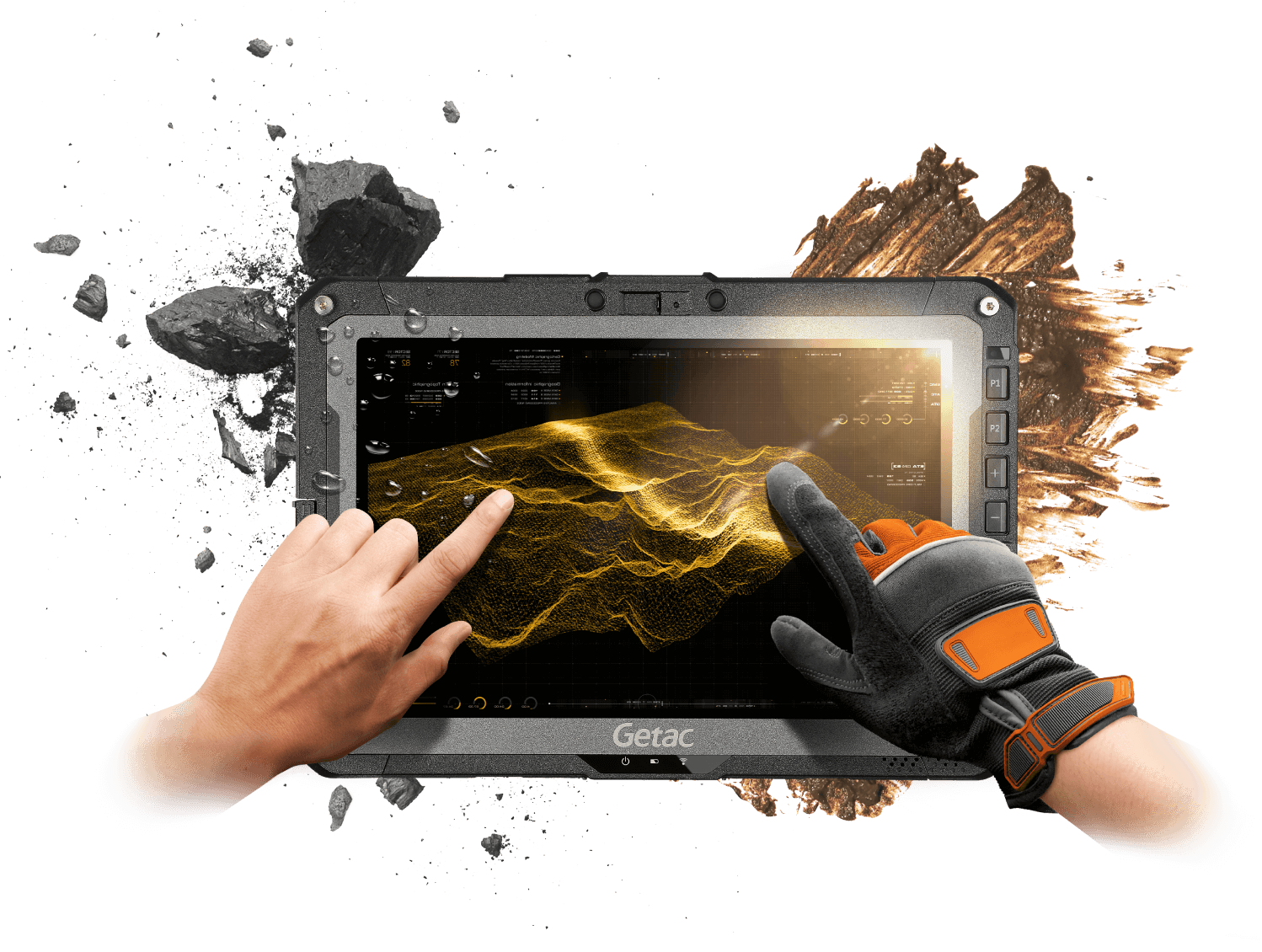
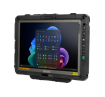
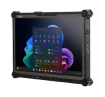
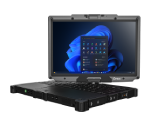
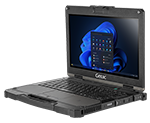
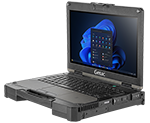
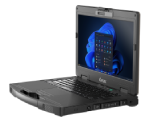
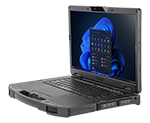
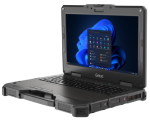
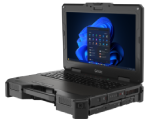
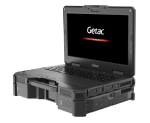
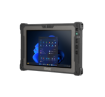
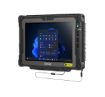
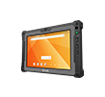
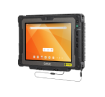
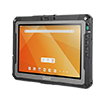
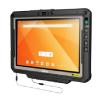
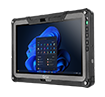
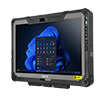
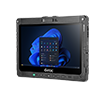
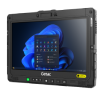
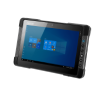














As one of the leading rugged computer providers, Getac offers extensive rugged computing product lines and serves a wide range of vertical markets.


Predictive maintenance programs can cut maintenance costs by up to 40% and raise equipment uptime by 10% to 20%, but only when field devices reliably capture and transmit data, per McKinsey.
A 10-person crew using non-purpose-built devices may lose an estimated 30 to 40 workdays per year to device-related failures, according to Getac's IDC-validated TCO analysis.
Rugged devices are evaluated against objective standards such as MIL-STD-810H, IP65/IP67 ratings, and ATEX/IECEx certification for hazardous environments.
Published utility deployments, including Stadtwerke Arnsberg, Thames Water, and San Gabriel Valley Water Company, report faster field processes, multi-year hardware reliability, and improved efficiency after adopting rugged mobile devices.
Hardware selection should be driven by field mission requirements (sunlight readability, battery continuity, connectivity, vibration resistance, glove-compatible touch) rather than spec sheets or upfront price alone.
Unplanned downtime in the utilities sector is widely recognized as a significant operational cost, one that compounds quickly across infrastructure-dependent businesses. ABB's 2023 survey of more than 3,200 plant maintenance decision-makers found that more than two-thirds of industrial businesses experience unplanned outages at least once a month, at an average cost of around $125,000 per hour. For water, gas, and electricity utilities, those hours add up fast. They rarely start with a failing transformer or a burst pipe. They often start with a technician in the field who cannot access the information they need to act.
That is why the hardware a utility enterprise deploys at the edge of its operations deserves more attention in technology procurement than it typically receives . Enterprise asset management software can be sophisticated, predictive, and well-integrated, but it is only as useful as the data that feeds it. And that data is entered, updated, and validated by technicians working outdoors, underground, and in environments that most commercial devices were never designed to handle.
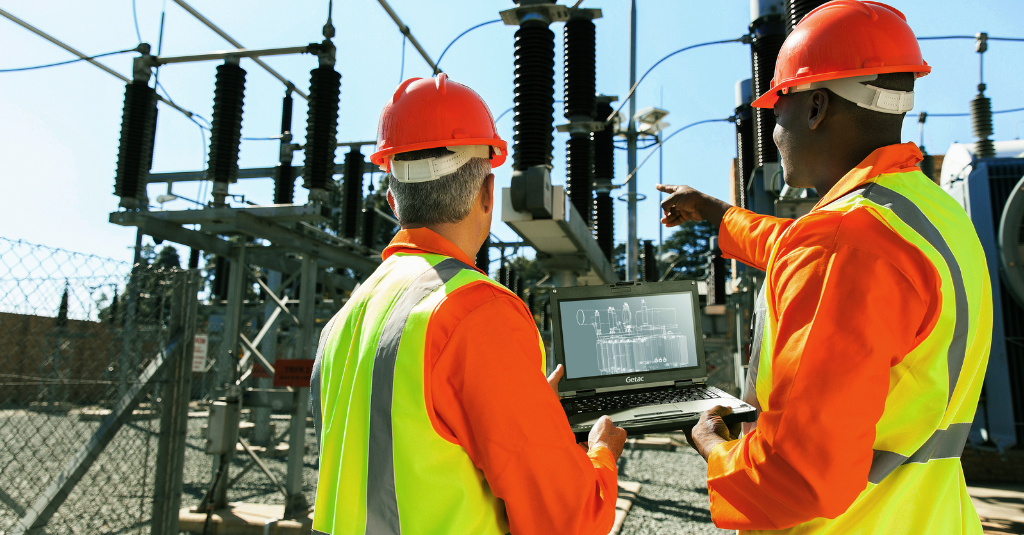
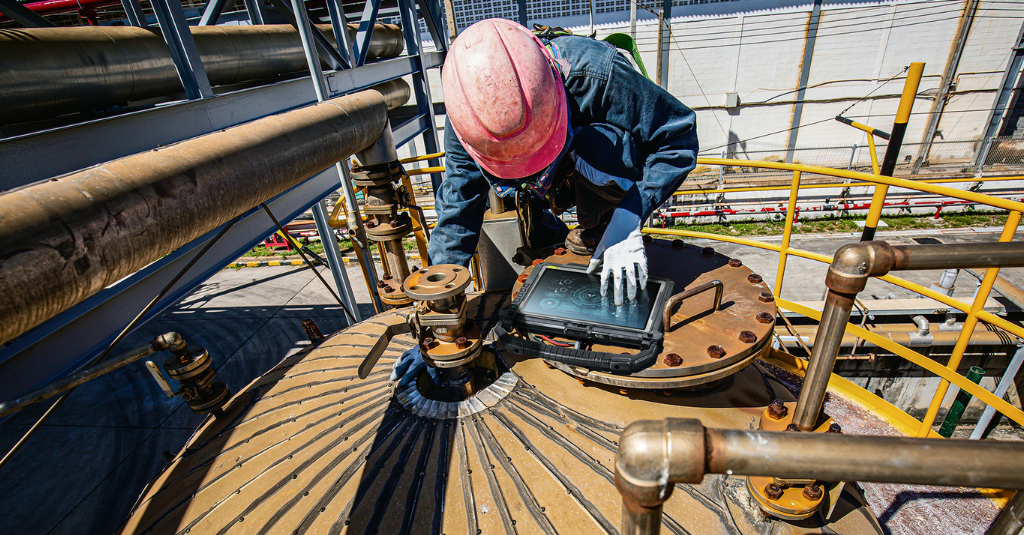
Field technicians use a rugged Getac device to access substation schematics on-site, supporting faster diagnostics and reducing the data delays that drive up total cost of ownership in electric utility field operations.
Modern utility asset management has moved away from reactive, break-fix maintenance toward a more proactive model driven by inspection data, sensor readings, and maintenance histories. McKinsey's research on distributed fixed assets estimates that predictive maintenance programs can reduce maintenance costs by up to 40% and increase equipment uptime by 10% to 20%, provided field devices reliably capture and transmit data in real time.
That dependency on field-level data makes mobile hardware a strategic concern, not just an IT procurement line item. When technicians are equipped with devices that fail in the rain, freeze in the cold, or become unreadable in direct sunlight, key parts of the data pipeline from the field to the back office can degrade. Work orders go outdated. Inspection records get reconstructed from memory. Compliance reports are filed hours after the fact. Over time, those gaps compound into planning blind spots that predictive maintenance systems cannot correct.
A typical utility repair mission moves through several stages: dispatch and routing, site assessment, schematic access, repair execution, and compliance reporting. Each step depends on the field device working as expected. When it does not, the downstream effects are wider than the individual delay.
In utility field environments, issues such as GPS signal loss, screen glare, and battery interruptions are commonly reported as sources of workflow delay. Across a fleet of dozens of devices, those interruptions can translate into meaningful lost labor over time.
According to Getac's IDC-validated TCO analysis, a 10-person crew relying on non-purpose-built field devices may lose an estimated 30 to 40 workdays per year to device-related failures. Results vary by deployment environment and device specification. Deloitte research found that unscheduled maintenance costs up to three times more than planned maintenance, a gap that widens further when the field devices meant to support early intervention are themselves unreliable.
Published utility deployments reflect these dynamics clearly. In Stadtwerke Arnsberg's water operations, combining Getac F110 tablets with GIS software accelerated field work processes by 50% and reduced errors by improving access to accurate network data at the point of work. Over five years of active field use, the utility reported no hardware failures, a result that speaks directly to the operational value of purpose-built rugged hardware in a demanding outdoor environment.
Rugged tablets and laptops are designed to tolerate the conditions that utility field work routinely involves drops on concrete, exposure to rain and dust, temperature swings between cold overnight callouts and hot outdoor summer work, and the constant vibration of being mounted in a service vehicle. The difference between a consumer device and a purpose-built rugged one is not a matter of degree. It is a matter of design intent.
Industry certifications provide an objective basis for evaluating that intent. MIL-STD-810H is the U.S. Department of Defense's environmental testing standard, administered by the Institute of Environmental Sciences and Technology (IEST), covering nearly 30 individual tests including drop resistance, temperature extremes from -29°C to 63°C, vibration, humidity, and salt-fog exposure. IP ratings, defined under IEC 60529, measure resistance to dust and water ingress: IP65 protects against water jets from any direction; IP67 adds submersion tolerance to one meter for 30 minutes. For gas utilities or petrochemical-adjacent environments, ATEX and IECEx certifications indicate that a device has been qualified for use in explosive or hazardous atmospheres, a requirement that no standard consumer device can meet.
These certifications are meaningful not because they translate directly into cost savings, but because they describe what a device has been tested to survive. In utility field work, that distinction has real operational consequences.
Thames Water's technology upgrade decision illustrates how this thinking operates at scale. The utility company selected the Getac ZX10 fully rugged Android tablet as part of a multi-year IT program designed to streamline field operations, improve productivity for engineers, and support a more proactive approach to asset management. The goal was not simply to replace older hardware. It was to use rugged mobile devices as a foundation for increasing first-time fix rates and reducing the reactive maintenance cycles that drive costs upward.
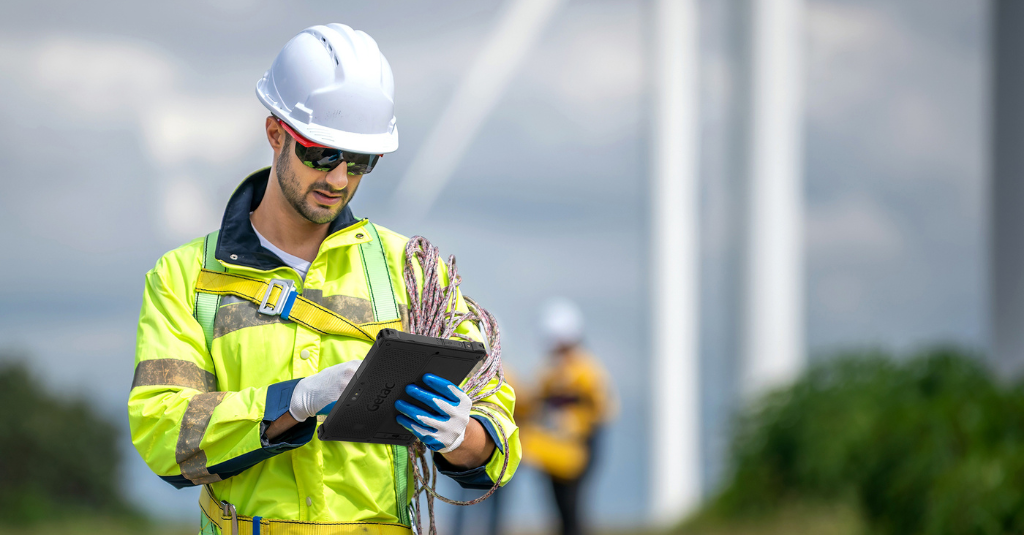
A rugged, glove-compatible tablet lets renewable energy field technicians capture inspection data directly at wind turbine sites, supporting the real-time asset visibility that predictive maintenance programs depend on.
Procurement decisions made primarily on upfront cost or benchmark performance often look different after the first year in the field. A device that meets every specification on paper but fails under rain, glove use, or cold temperatures creates hidden costs that accumulate across a fleet. The more useful framework is to evaluate hardware against the specific conditions and workflows technicians encounter daily.
For utility field operations, that typically means asking questions, examples of which are below:
Does the display remain readable in direct sunlight, particularly for GIS mapping, schematic review, and work order access outdoors?
Can the battery be swapped in the field without shutting down the device during a 10- to 14-hour shift?
Does the device support the connectivity mix the deployment requires, including cellular, Wi-Fi, dedicated GPS, and legacy peripheral interfaces such as barcode scanners or serial ports?
Can it withstand the vibration and shock of vehicle-mounted use on rough terrain?
Does the touchscreen register accurately when the operator is wearing heavy protective gloves or working in wet conditions?
When these questions are answered before procurement, hardware selection becomes a more direct conversation about operational fit. San Gabriel Valley Water Company's experience illustrates the downstream benefit of getting that conversation right: after transitioning from paper-based field processes to Getac rugged devices, the utility's published summary notes improvements in efficiency and productivity across both field and office operations. That shift, from clipboards and delayed manual entry to digital capture at the point of work, is one area where mission-aligned hardware can make a practical difference.
Utility asset management outcomes depend as much on what happens in the field as on the enterprise systems that process data. When field hardware is matched to the environment, utilities are generally better positioned to maintain inspection quality and support earlier maintenance interventions, though outcomes will vary by deployment.
The evidence from published utility deployments points in a consistent direction. Stadtwerke Arnsberg reported measurably faster field processes and five years of hardware reliability. Thames Water anchored a multi-year productivity and asset-management upgrade on a rugged Android platform. San Gabriel Valley Water Company moved off paper and improved efficiency across its operations. These outcomes are deployment-specific, but they illustrate what becomes possible when rugged mobile hardware is treated as a meaningful part of asset-management strategy rather than a commodity line item.
For operations directors and IT buyers evaluating field device decisions, a structured TCO assessment is a practical starting point. Comparing total deployment cost, including failure rates, warranty terms, and productivity impact, against a mission-driven hardware specification tends to change the conversation significantly.
Understanding the technology that underpins modern utility field operations helps inform decision-making across IT, operations, and procurement teams. The following terms are central to this discussion.
Predictive maintenance uses data analysis and anomaly detection to identify potential equipment failures before they occur. Effective predictive maintenance depends on a steady flow of accurate inspection and sensor data from the field.
GIS mapping provides utilities with a spatial view of infrastructure assets, including lines, substations, valves, and meters, and is used extensively in utility field operations, network planning, and emergency response. Outdoor GIS use requires displays that remain legible in direct sunlight.
Total cost of ownership (TCO) extends beyond purchase price to include repairs, replacements, IT support, and the productivity cost of device failures. For large field device fleets, TCO analysis over a three-to-five-year horizon typically tells a different story than upfront pricing comparisons alone.
Edge computing brings processing closer to where data is generated. In utility asset management, this allows rugged laptops and tablets to run diagnostics, process inspection data, and interact with SCADA systems even when cloud or network connectivity is intermittent.
SCADA (Supervisory Control and Data Acquisition) systems provide real-time monitoring and control of utility infrastructure. The global SCADA market is projected to grow from $41.75 billion in 2024 to $78.25 billion by 2032 (Fortune Business Insights), reflecting the scale of digital transformation investment utilities are making. Field devices used alongside SCADA workflows need stable, consistent performance in demanding outdoor and industrial environments.
AMI (Advanced Metering Infrastructure) is the two-way communication framework connecting smart meters, networks, and meter data management platforms. As AMI adoption expands across North America and Europe, more device-based commissioning and troubleshooting work moves into the field, requiring mobile devices capable of operating in outdoor, all-weather conditions.
FOTA (Firmware Over the Air) enables IT teams to push firmware and driver updates to field devices remotely. Getac's SmartUpdate utility enables Windows-based FOTA deployment, reducing the need to recall devices from active deployment for manual updates.
Hot-swappable batteries allow field workers to replace a depleted battery without powering down the device, a practical requirement for continuous outdoor shifts where no charging infrastructure is available. Getac's UX10 and F110/F120 rugged tablets are engineered with this capability for continuous field deployment.
How do rugged tablets support utility asset management workflows?
Rugged tablets are designed to reduce common hardware bottlenecks that slow field execution. With sunlight-readable displays, glove-capable touchscreens, and reliable connectivity, technicians can access GIS maps, open work orders, and submit reports directly from the field, reducing the manual re-entry and delays that degrade asset data quality over time.
What are the main benefits of rugged laptops for utility field teams?
Rugged laptops provide higher processing capacity for applications such as SCADA interfaces, diagnostic tools, and large-format drawing or GIS files. Unlike consumer notebooks, they are designed for continuous outdoor use, vehicle-mounted operation, and exposure to dust, temperature extremes, and physical impact.
Why can consumer-grade devices cost more over time in utility environments?
Consumer devices typically carry a lower purchase price, but their failure rates in harsh field conditions can create replacement costs, IT support burden, and lost productivity that accumulate across a fleet. TCO analysis over a realistic deployment period is generally a more accurate basis for fleet investment decisions than upfront unit cost alone.
What is the difference between fully rugged and non fully rugged devices?
Fully rugged devices are engineered from the ground up for continuous outdoor and industrial use, carrying MIL-STD-810H certification and IP65 or higher ratings as standard. Non fully rugged devices offer a degree of environmental protection but are better suited to roles that divide time between office and occasional light field work. For transmission, distribution, and inspection crews working in the field every day, fully rugged is typically the more appropriate specification.
What connectivity does a rugged tablet need for utility field operations?
Many utility field deployments require 4G LTE or 5G cellular connectivity, since substations, rights-of-way, and underground vaults regularly fall outside Wi-Fi coverage. Dedicated GPS, separate from the cellular module, is also commonly required for precise asset location during GIS-assisted inspection and safe excavation. Getac rugged tablets and vehicle-mounted solutions are configurable with multi-carrier 5G modules, discrete GPS, and expanded I/O to meet these requirements.
How do utilities manage and secure large, rugged device fleets?
Many utilities deploy Mobile Device Management (MDM) platforms to configure, update, monitor, and secure field devices at scale. These tools support firmware updates over the air, security policy enforcement, and health monitoring devices without requiring field teams to return hardware to a central IT location. Windows devices integrate with management tools such as Microsoft Intune; Android devices can be managed through Android Enterprise-certified platforms.

As one of the leading rugged computer providers, Getac offers extensive rugged computing product lines and serves a wide range of vertical markets.


Subscribe below to be kept up to date on the latest industry and technology trends. We will send you a monthly blog round-up direct to your inbox.