
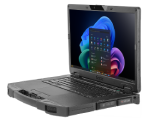
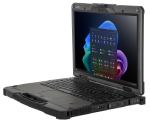
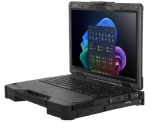
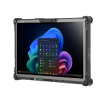
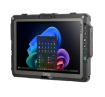
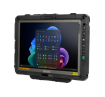
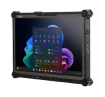
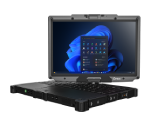
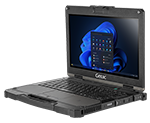
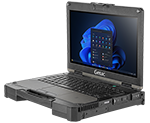
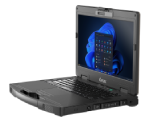
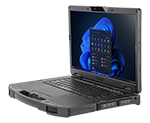
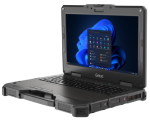
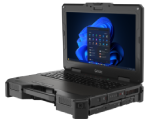
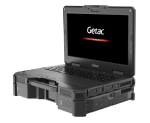
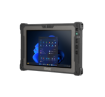
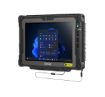
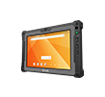
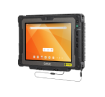
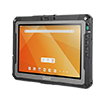
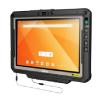
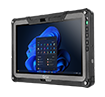
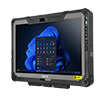
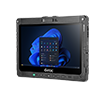
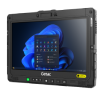
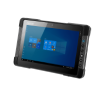

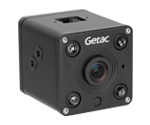
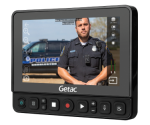


















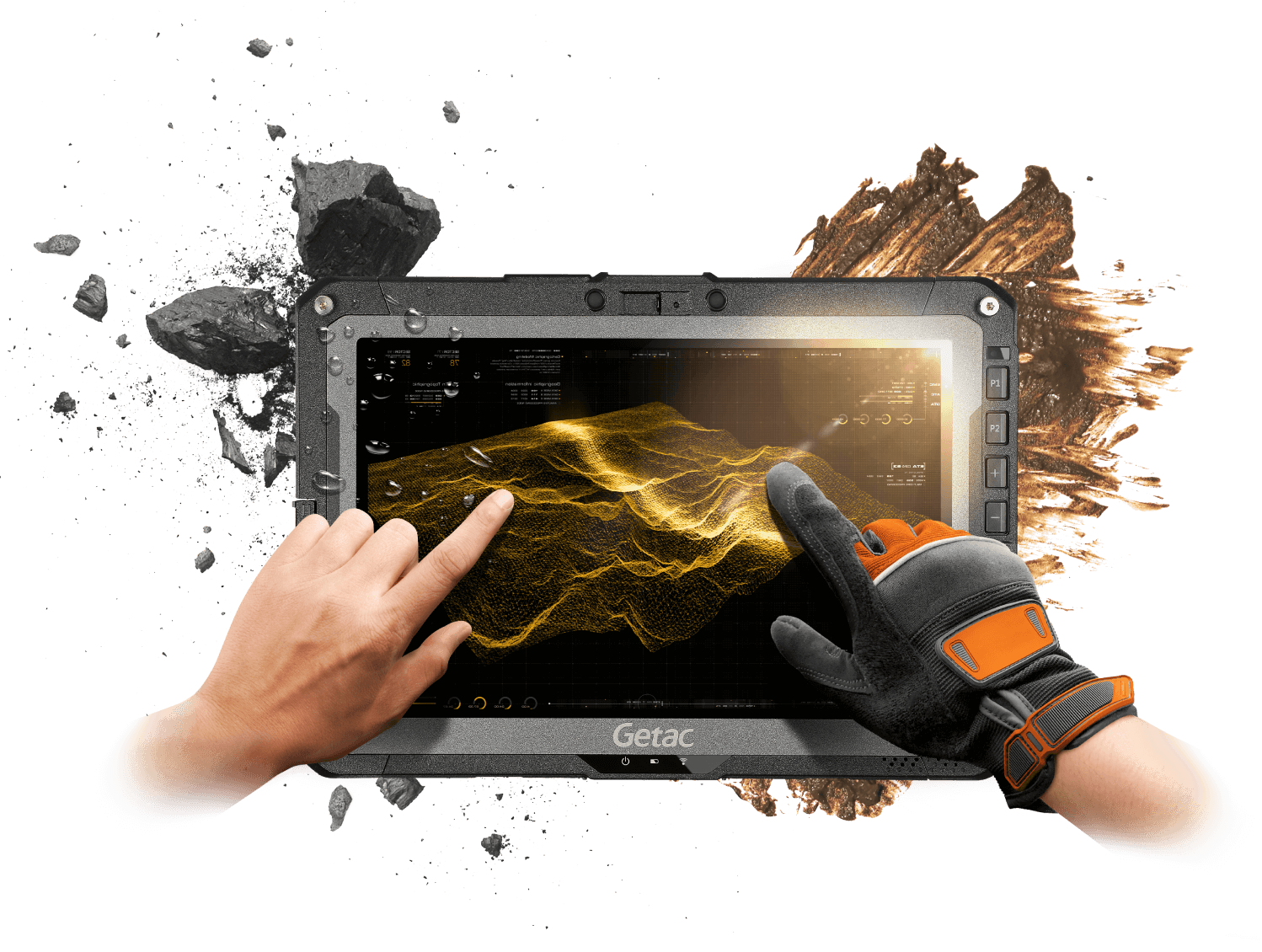
As one of the leading rugged computer providers, Getac offers extensive rugged computing product lines and serves a wide range of vertical markets.


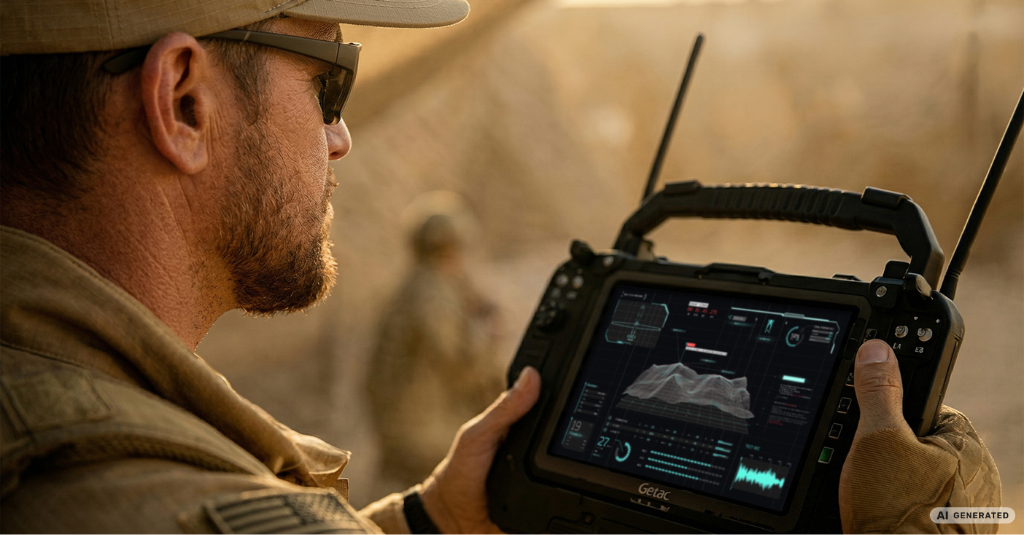
Rugged device ROI is measured through lifecycle economics — reduced replacement cycles, less downtime, and lower total cost of ownership — not just the upfront purchase price.
Added weight and bulk in fully rugged devices reflect deliberate engineering, such as reinforced construction tested to MIL-STD-810H and IP ingress ratings, that enables survivability in harsh conditions, not a design shortfall.
Rugged devices often remain in service five or more years, versus roughly 18–24 months for consumer-grade alternatives in the field, according to a 2024 IDC InfoBrief commissioned by Getac.
Organizations switching from consumer to rugged hardware report TCO reductions of approximately 20–30% for laptops and 10–20% for tablets, per the same IDC research.
Unplanned downtime is costly: over 90% of surveyed mid-size and large enterprises estimate a single hour at more than $300,000, per ITIC's 2024 research — a key input for calculating rugged ROI.
A bumper-to-bumper warranty helps offset out-of-warranty repair costs, which average around $600 per incident, improving cost predictability across a device fleet.
Pre-engineered bundles, such as Getac Select configurations, reduce procurement complexity by offering plug-and-play options tailored to specific industries like utilities, manufacturing, and law enforcement.
Rugged Device ROI refers to the total financial return organizations can achieve when mission‑grade hardware, engineered to survive drops, extreme temperatures, and continuous field use, outlasts consumer alternatives over an extended deployment lifecycle.
Unlike typical IT procurement processes, rugged device investment should be measured by lifecycle economics, such as reduced replacement cycles, minimized operational downtime, and lower total cost of ownership in demanding enterprise environments.
The term “rugged devices” can carry a negative connotation: they are heavy, carry a premium upfront price, and are complex to configure. These perceptions may change when evaluating enterprise rugged laptops in the context of real-world field deployments. While these points contain elements of truth when compared with consumer-grade devices, they may not fully reflect the realities of enterprise hardware investment. In rugged environments, traditional consumer metrics need to be supplemented with lifecycle and durability considerations to capture the full economic impact of hardware choices.
To evaluate these tools accurately, organizations should shift their focus to Rugged TCO Benefits (Total Cost of Ownership) and rugged device ROI, a recalibration already underway across enterprise IT, as reflected in estimates that place the global rugged computing market at $6.1 billion in 2024 and projected to reach $8.9 billion by 2033. The enhanced, ruggedly designed features are deliberate engineering decisions intended to support critical operations in demanding environments.
This article addresses common assumptions surrounding rugged hardware . By reframing bulk as survivability, shifting the financial focus to lifecycle economics, clarifying ecosystem positioning, and demonstrating how modern configuration processes have been drastically simplified, we aim to provide a clear, evidence-informed perspective on what enterprise buyers are paying for.

Rugged laptops bring full diagnostic capability directly to the point of work; no need to shuttle data between a workstation and the field.
Getac devices are heavier and bulkier than standard consumer tablets. We assertively own this fact. In practice, surviving a six-foot drop, enduring torrential rain, or operating in freezing temperatures generally requires reinforced construction, as reflected in independent testing standards including MIL-STD-810H for shock, vibration, and temperature extremes, and IP ratings for dust and water ingress protection.
When evaluating enterprise hardware, "weight" may not be the ideal metric. A more appropriate metric in these scenarios is "mission-grade durability" or "survivability." Consumer devices deployed in field service or industrial environments can experience elevated failure rates compared to rugged hardware. Many standard tablets are not designed to withstand prolonged forklift vibration or extreme utility‑site temperatures. The bulk of a fully rugged device reflects the additional materials and design features that support resilience in harsh conditions.
For users who do not require extreme protection, lighter-weight rugged laptops like the S510 are also available within the portfolio. Tablets are offered exclusively in Fully Rugged configurations, though smaller form factors can reduce overall weight while maintaining full protection. This ensures organizations can select the right tool for the specific job, balancing the need for mobility with the demand for rugged hardware lifespan.
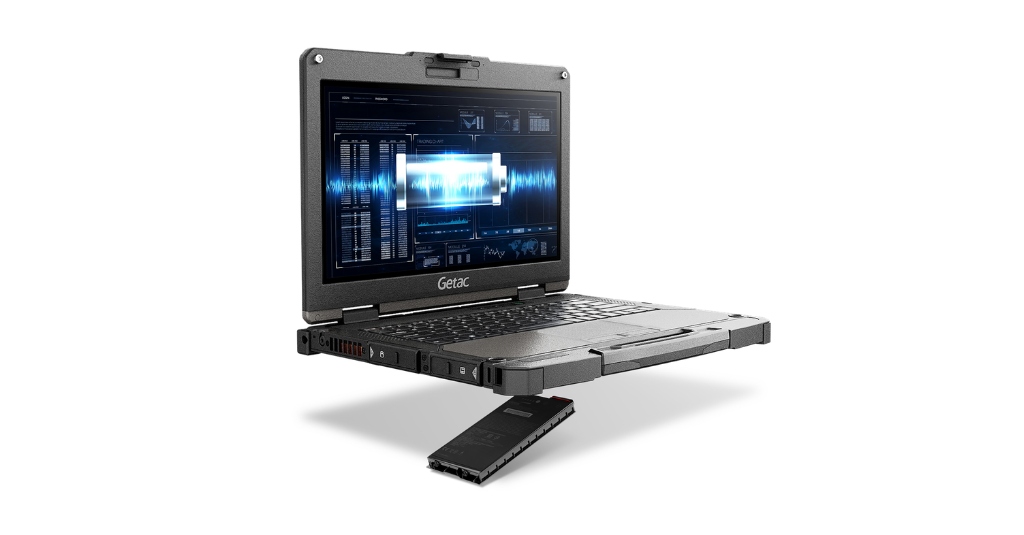
Battery configuration is one of the biggest drivers of rugged laptop weight, and one of the biggest enablers of all-day field uptime.
The most common hurdle in rugged device procurement is the "premium upfront price" caveat. It is true that the initial capital expenditure for a rugged tablet or laptop is higher than that of off-the-shelf consumer tech. However, focusing solely on the sticker price obscures the concrete lifecycle economics that govern enterprise budgets.
The ITIC 2024 Hourly Cost of Downtime Survey reports that over 90% of responding mid‑size and large enterprises estimate a single hour of unplanned downtime at more than $300,000.In this context, a consumer tablet might cost a fraction of a rugged device upfront, but when deployed in field environments, consumer‑grade equipment is often replaced within roughly two years, according to an IDC InfoBrief commissioned by Getac, that surveyed 990 IT decision‑makers across six global regions. Replacing such devices involves not only the purchase of new hardware, but also potential costs related to lost productivity, IT deployment time, and data loss—costs that a bumper-to-bumper warranty is intended to help mitigate over the device lifecycle.
The IDC study also found that organizations deploying rugged devices reported TCO reductions of 20–30% for laptops compared to consumer-grade alternatives. By extending the operational life of the hardware and helping minimize failures in the field, organizations can realize meaningful TCO improvements. This shift from initial purchase price to long-term reliability can translate into stronger rugged device ROI for many organizations.
Key lifecycle economics at a glance:
In demanding field environments, rugged devices often remain in operation for five or more years, while consumer alternatives are frequently replaced within 18–24 months, according to IDC’s 2024 InfoBrief.
In a 2024 IDC InfoBrief commissioned by Getac, surveyed organizations reported TCO reductions of approximately 20–30% for laptops and 10–20% for tablets when switching from consumer to rugged hardware.
ITIC’s 2024 research reports that more than 90% of responding mid‑size and large enterprises estimate a single hour of unplanned downtime at over $300,000.
Out-of-warranty repairs for rugged devices can average around $600 per incident — costs that a bumper‑to‑bumper warranty is designed to cover, helping to significantly reduce this expense .
Some reviews highlight audio and camera quality or ecosystem positioning as limitations. Those perspectives may overlook the engineering trade‑offs central to rugged design.
Rugged devices are engineered for critical data capture and secure communication in extreme environments, not for cinematic media consumption. The cameras are optimized for rapid barcode scanning in low light or documenting field damage. The speakers and microphones are calibrated to cut through the noise of a loud factory floor or a sirens-blaring emergency response scene.
Furthermore, focusing on open, adaptable architectures often provides more flexibility for IT departments. Rather than being locked into a rigid, singular ecosystem, organizations can integrate mission-grade hardware into their existing software environments seamlessly.
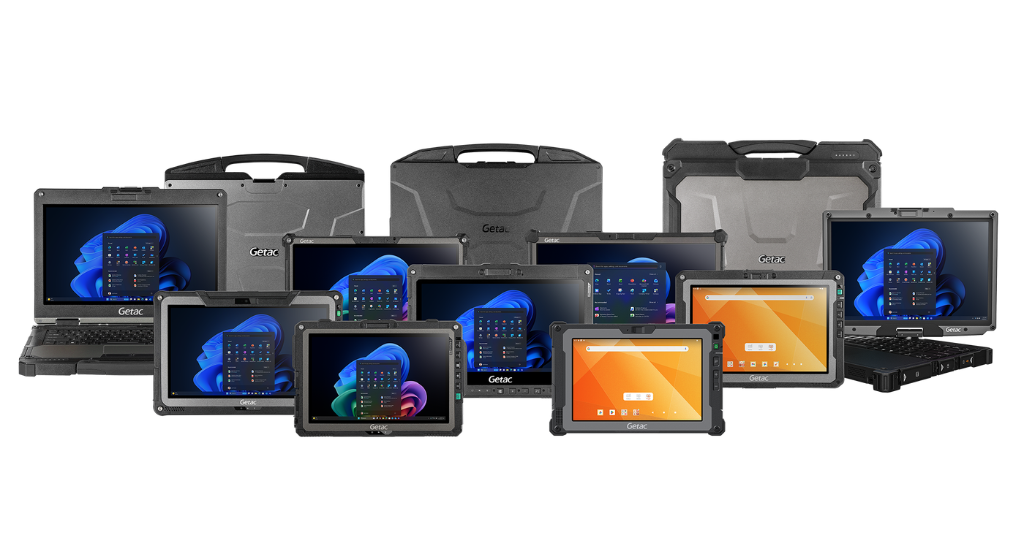
Rugged device ROI starts with the right fit. Getac's laptop and tablet lineup lets organizations match hardware to operational needs instead of over- or under-investing.
A persistent complaint regarding rugged hardware is that buying and configuring devices through specialized resellers is overly complex. Historically, navigating highly customizable hardware options did require extensive IT oversight. Today, much of that friction has been systematically reduced.
The introduction of named bundles, such as Getac Select configurations, provides a direct counter-narrative to the assumption of configuration complexity. These configurations are pre-engineered for specific industry use cases, such as utilities, manufacturing, or law enforcement.
By offering tailored, plug-and-play solutions, these bundles are intended to reduce much of the guesswork in the procurement process. IT buyers can rapidly deploy devices that are already optimized for their operational needs, streamlining the path from purchase to field deployment.
Factors flagged as drawbacks in some reviews reflect deliberate engineering choices that support reliable operation in harsh conditions. Weight is often tied to configuration choices such as dual- or triple-battery setups, or high-capacity batteries built for extended work shifts, many of which are hot-swappable, so field teams can replace a battery without powering down. Premium upfront pricing supports lifecycle economics that many organizations find compelling over time. Utilitarian media components are tuned to support functionality in noisy or chaotic environments.
Many organizations report long‑term financial and operational benefits when they invest in mission‑grade durability. Organizations that account for these factors can make more informed decisions about their enterprise hardware investments. Explore Getac Select configurations today to identify solutions aligned with your operational needs.
In many demanding use cases, rugged laptops can offer stronger rugged device ROI than typical consumer laptops. By surviving harsh conditions for up to five years, they can significantly reduce the frequent replacement costs, IT labor, and operational downtime associated with deploying fragile consumer hardware in enterprise environments.
A complete TCO calculation accounts for the initial purchase price, deployment and configuration costs, maintenance and repair expenses over the lifecycle, downtime-related productivity loss, and end-of-life replacement costs. Organizations that evaluate only the purchase price may underestimate the broader cost of consumer hardware. Some studies suggest total costs can be 40–50% higher once repair cycles, IT labor, and operational downtime are factored in. When properly deployed, rugged devices can help reduce several post‑purchase cost drivers.
What industries benefit most from rugged device ROI?
Industries where device failure has direct operational or safety consequences can realize particularly strong rugged device ROI in these contexts. Utilities, public safety, defense, manufacturing, and field services often report substantial benefits because downtime in these sectors may involve costs well beyond hardware replacement, including lost productivity, SLA‑related impacts, and safety considerations. In a Getac‑commissioned IDC study, surveyed organizations in these five verticals reported measurable TCO reductions when deploying rugged devices.
What is the typical lifespan of a rugged laptop versus a consumer laptop?
A fully rugged laptop is engineered for long‑term operation, with many deployments targeting five or more years of service in demanding field environments. Consumer laptops in similar conditions typically require replacement within 18–24 months due to physical damage, component failure from vibration or moisture exposure, or inadequate thermal performance. That three-year difference in operational life represents a significant driver of rugged device ROI when multiplied across a fleet of devices.
Does a bumper-to-bumper warranty improve rugged device ROI?
Yes, it can have a substantial impact. A standard manufacturer's warranty typically covers defects for two to three years and excludes accidental damage, the most common failure mode in field deployments. A bumper‑to‑bumper warranty can substantially reduce one of the largest unpredictable cost variables in a device fleet. Getac’s bumper‑to‑bumper warranty (for fully rugged devices) helps organizations estimate device lifecycle costs with a high degree of confidence at the time of purchase, reducing the budget risk associated with out‑of‑warranty repair costs.
Mission-Grade Durability - The ability of hardware to withstand extreme environmental conditions while ensuring consistent functionality, often required for critical operational tasks.
Rugged Device ROI - Return on investment gained from investing in durable, ruggedized devices that deliver long-term performance and reduced replacement costs.
Enterprise Hardware Investment - Allocation of resources into hardware specifically designed to support business operations and meet enterprise-level demands.
Operational Needs - Specific requirements or challenges rooted in the routine tasks and conditions under which an organization operates.
Getac Select Configurations - Tailored device solutions offered by Getac, engineered to address diverse business and operational scenarios with precision and reliability.
MIL-STD-810H - A U.S. Department of Defense environmental testing standard that verifies a device can withstand the physical and climatic conditions encountered in military and industrial field operations. Devices certified to MIL-STD-810H have been tested across up to 30 discrete environmental stressors including extreme temperature ranges, shock, vibration, altitude, humidity, and salt fog exposure. For enterprise buyers, MIL-STD-810H certification is the primary objective benchmark for rugged hardware survivability.
IP Rating (Ingress Protection) - A two-digit classification defined by the IEC 60529 standard that quantifies a device's resistance to solid particle ingress (first digit, scale 0–6) and liquid ingress (second digit, scale 0–9). An IP65 rating indicates complete dust protection and resistance to water jets; IP67 adds protection against temporary submersion; IP68 certifies continuous submersion at defined depths. For field-deployed hardware, IP rating is the objective measure of environmental sealing quality and determines whether a device is suitable for outdoor, wet, or dusty operating conditions.

As one of the leading rugged computer providers, Getac offers extensive rugged computing product lines and serves a wide range of vertical markets.


Subscribe below to be kept up to date on the latest industry and technology trends. We will send you a monthly blog round-up direct to your inbox.