






















Key Takeaways
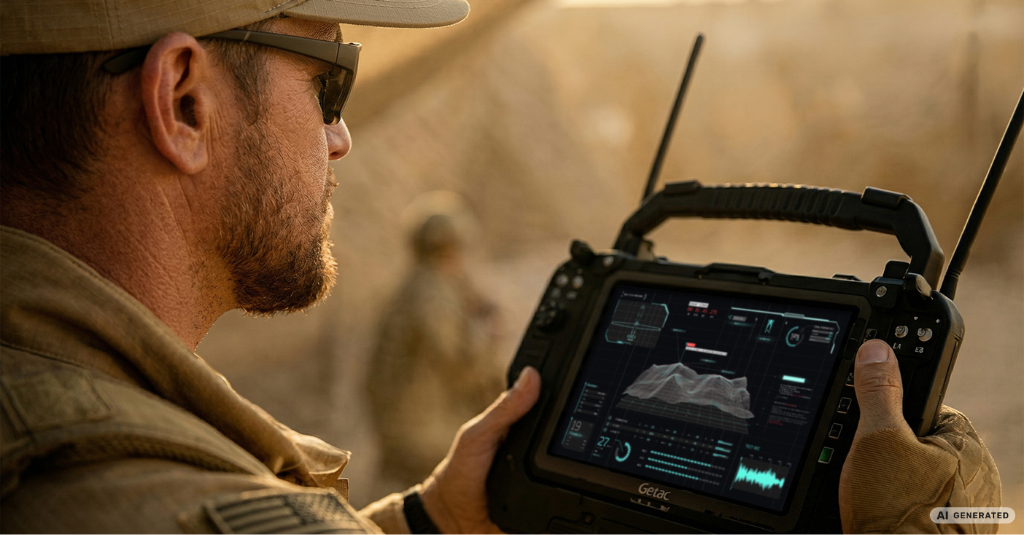
AI-ready rugged laptops combine dedicated NPU/GPU processing with military-grade durability, helping real-time AI inference in environments where standard devices fail.
Getac systems deliver up to 275 TOPS of computational power — sufficient for on-device object detection, predictive analytics, and automation without cloud dependency.
MIL-STD-810H, IP66/67, and ATEX/IECEx Zone 2 certifications are the baseline standards for field-deployable AI hardware in industrial and hazardous environments.
Edge AI capability is critical for utilities, defense, mining, and public safety workers operating in remote or network-denied locations.
Rugged AI laptops deliver lower TCO than standard devices through longer lifecycles, fewer replacements, and reduced downtime — making the total lifetime cost case stronger than acquisition price alone suggests.
Field workers in utilities, defense, manufacturing, and public safety are increasingly running AI applications directly on their devices — processing sensor data, analyzing video feeds, and generating real-time alerts without waiting on a cloud connection. That shift has created a specific hardware problem: standard AI laptops aren't built for the heat, dust, drops, and vibration of field environments. Rugged laptops purpose-built for AI workloads solve this by pairing the processing power needed for on-device inference with the certifications required to survive where the work actually happens.
The Importance of Integrating AI Capabilities in Rugged Devices
The integration of AI in rugged devices is crucial for industries such as public safety, manufacturing, utilities, and automotive, where workers often operate in challenging conditions. AI-ready rugged laptops enable these professionals to harness the power of AI in the field, providing them with real-time insights, predictive analytics, and intelligent automation. AI tools empower developers, creators, and business owners across these sectors to innovate and optimize workflows through advanced AI technology. By leveraging AI capabilities, organizations can improve operational efficiency, reduce downtime, and enhance worker safety.
For instance, in the public safety sector, AI-ready rugged laptops can assist first responders in quickly analyzing large amounts of data, such as video feeds from body-worn cameras or aerial drones, to identify potential threats or locate missing persons. In the manufacturing industry, AI algorithms can be used to monitor equipment performance, predict maintenance needs, and optimize production processes, ultimately reducing costs and improving quality control.

AI-ready rugged laptops enable organizations to tackle complex challenges and drive innovation.
Key Features of an AI-Ready Rugged Laptop with Long Battery Life
To effectively support AI workloads in demanding environments, an AI-ready rugged laptop must possess several key features:
Powerful Processing
AI-ready rugged laptops require high-performance neural processing units, or neural-network processing units (NPUs), such as Intel®’s Core™ Ultra series, to handle complex AI algorithms and parallel processing tasks. These NPUs are responsible for executing instructions and performing tasks in a computer system, helping ensure optimal performance in rugged conditions through a balance of speed, efficiency, and thermal management.
In addition to the integrated NPUs, AI-ready rugged laptops also include NVIDIA® RTX™ discrete GPUs for accelerated AI workload processing time. The multi-processor configuration for parallel computing, processing computational loads up to 100-275 trillion operations per second (TOPS). This processing power is ideal for high-bandwidth tasks like real-time object detection and predictive analytics at the tactical edge.
Dedicated AI Engine
Many AI-ready rugged laptops feature dedicated AI engines, such as Intel®’s AI Boost or NVIDIA’s GeForce GTX graphics processing units (GPUs), which are specifically designed to accelerate AI workloads. These GPUs are specialized electronic circuits designed for rendering graphics and parallel processing tasks, supporting AI workloads beyond graphics processing with their versatility in applications like scientific computing, data analysis, machine learning, and deep learning. This enables faster inference times and improved accuracy for AI applications.
Rugged Design
To withstand harsh environments, AI-ready rugged laptops must be built to military-grade standards, such as MIL-STD-810H, and have ingress protection (IP) ratings. These devices should be able to operate in harsh temperatures, resist dust and water intrusion, and withstand drops, vibrations, and shocks.
The matrix in Table 1 below describes maps technical certifications and ratings to common operational scenarios, use cases, and their hazards.
Operational Scenario | Use Case | Environmental Hazards | Technical Features & Compliance |
Tactical Defense | Real time object detection and ISR processing Tactical edge analytics in edge/non-cloud environments | Shock, salt-fog, EMI | MIL-STD-461G, MIL-STD-810H, Magnesium Alloy Chassis |
Industrial Mining | Predictive maintenance for heavy equipment Monitoring in harsh conditions | Constant vibration, dust | IP67 ingress protection, Solid-state vibration isolation |
Energy & Utilities | Grid inspection and anomaly detection Operation in explosive or hazardous environments | Explosive gases, extreme temperatures | ATEX/IECEx Zone 2 compliance, -20°C to +70°C range |
Industrial & Field Service | On-device diagnostics and automation Offline AI processing in remote locations | Dust, extreme temperatures | IP67 ingress protection, ATEX/IECEx Zone 2 compliance, -20°C to +70°C range |
Table 1: Primary use cases for operational scenarios, hazards, and standards/ratings
Enhanced Connectivity
AI-ready rugged laptops must offer a range of connectivity options to ensure seamless data transfer and communication in the field. This includes support for WiFi 6E, Bluetooth 5.3, 4G LTE, and 5G Sub-6 capabilities, enabling workers to access cloud-based AI services and transmit data in real-time.
Long Battery Life
Since AI workloads can be power-intensive, AI-ready rugged laptops should be equipped with high-capacity, hot-swappable batteries to ensure uninterrupted operation throughout long shifts. This is particularly important for workers in remote locations where access to power sources may be limited.
Enterprise Integration & Security
Getac supports common industrial communication protocols for seamless integration with enterprise systems. Supported protocols include MQTT, OPC UA, and Modbus. These protocols deliver low-latency inter-machine communication, simplifying the transmission of telemetry data from edge sensors to localized AI models.
AI-capable, enterprise-integrated technology also requires high-performance security. Getac uses a multi-layered security architecture to secure mission-critical deployments of AI-ready rugged tablets.
Features include TPM 2.0 hardware-based encryption, multi-factor authentication (MFA), biometric access control, and Zero Trust architecture support. These security features secure over the air (OTA) updates and provide remote device monitoring and management.
Real-World Industry Applications
AI-ready rugged laptops are valuable in various industries, enabling organizations to tackle complex challenges and drive innovation. For example, in the automotive industry, AI-powered rugged devices are being used to streamline vehicle maintenance and repair processes. By analyzing sensor data and historical maintenance records, AI algorithms can predict potential issues before they occur, help reduce downtime, and improve vehicle safety.
In the utilities sector, AI-ready rugged laptops can help field workers optimize energy distribution networks and respond to outages more efficiently. By processing real-time data from smart meters and IoT sensors, AI algorithms can identify patterns, detect anomalies, and provide predictive insights, enabling utilities to improve grid stability and customer service.

AI-powered rugged laptops benefit the automotive industry by streamlining vehicle maintenance and repair processes.
Introducing the Getac S510: A Cutting-Edge AI-Ready Rugged Laptop
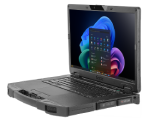
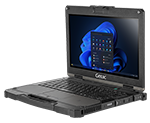
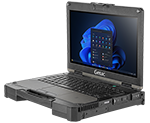
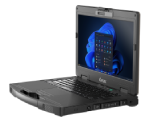
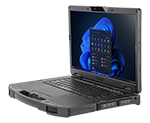
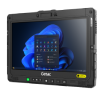
One of the latest advancements in the field of AI-ready rugged laptops is the Getac S510. This state-of-the-art device is designed to empower professionals in industries like utilities, public safety, manufacturing, military or federal, and automotive with AI capabilities and top-notch ruggedness.
The Getac S510 has an Intel® Core™ Ultra processor using NPUs with Intel® AI Boost technology, providing ample power to handle compute-intensive AI workloads. The laptop can be configured with up to 64GB of DDR5 RAM and 2TB of PCIe NVMe SSD storage, ensuring smooth performance and large capacity for data-heavy applications.
With its 15.6-inch Full HD display offering 1,000 nits of brightness, the S510 maintains excellent visibility even in sunlight. The device is certified to MIL-STD-810H standards, can withstand drops from up to 3 feet, and has IP53 protection against dust and water ingress. This ruggedness makes the S510 well-suited for operation in challenging field conditions.
Connectivity is another strong suit of the S510. It supports the latest Wi-Fi 6E and Bluetooth 5.3 standards, as well as optional 4G LTE and 5G Sub-6 capabilities for uninterrupted access to cloud-based AI services. The laptop also features Thunderbolt™ 4 ports for fast data transfer and compatibility with modern peripherals.
Moreover, the Getac S510 is designed with sustainability in mind. It incorporates post-consumer recycled materials, reflecting Getac’s commitment to reducing environmental impact without compromising performance.
The Getac S510, boasting compatibility with the Microsoft Copilot key for advanced AI capabilities, also integrates Microsoft Windows Studio Effects to elevate AI experiences, reinforcing its appeal to professionals seeking cutting-edge technological solutions.
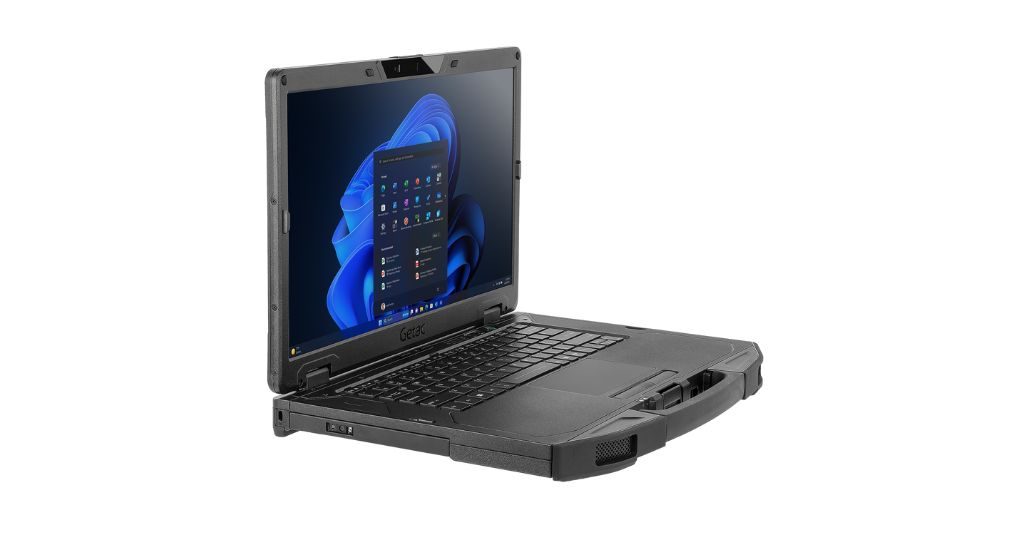
The S510 is Getac's latest rugged laptop that boasts the latest Intel® Core™ Ultra processor using NPUs with Intel® AI Boost technology, providing ample power to handle compute-intensive AI workloads.
Considerations for Businesses When Procuring AI-Ready Rugged Laptops
As businesses look to invest in AI-ready rugged laptops, there are several key considerations to keep in mind:
- Assess Your AI Workload Requirements: Evaluate the specific AI applications and workloads your organization will be running to ensure the chosen device has the necessary processing power, memory, and storage capacity.
- Consider the Operating Environment: Take into account the environmental conditions in which the AI-ready rugged laptop will be used, such as temperature ranges, humidity levels, and potential exposure to dust, water, sunlight viewability, or vibrations. Ensure the device has the appropriate ruggedness certifications and IP ratings.
- Evaluate Connectivity Needs: Assess your organization’s connectivity requirements, including the need for Wi-Fi, Bluetooth, cellular (4G LTE or 5G), and wired connections. Consider the availability and reliability of network infrastructure in the areas where the device will be used.
- Plan for Battery Life: Consider the expected duration of field operations and ensure the AI-ready rugged laptop has sufficient battery life to support uninterrupted work. Look for devices with hot-swappable batteries for extended runtime.
- Factor in Scalability and Future-Proofing: Choose an AI-ready rugged laptop that can scale with your organization’s growing AI needs. Consider devices with upgradeable components and support for emerging technologies to ensure long-term value and adaptability.
- Consider Total Cost of Ownership (TCO) in ROI Analyses: AI-ready rugged tablets can also deliver a lower TCO, improve the unit economics of device ROI assessments. Getac’s 3-year bumper-to-bumper warranty, combined with fanless thermal management, and globally-standardized technical specifications offer several total cost advantages. They reduce total lifecycle investment through fewer hardware refreshes, longer device lifecycle, and lower capital outlay. Lifetime device spend is a critical component when assessing the business case of AI-ready rugged devices.
Future Trends and Developments
As AI continues to advance at a rapid pace, we can expect to see further developments in the field of AI-ready rugged laptops. Some of the key trends and developments to watch out for include:
- Edge AI: The integration of AI processing capabilities directly into rugged devices, enabling real-time decision-making and reducing reliance on cloud connectivity. Edge computing further enhances this by enabling real-time AI processing on rugged laptops, offering a robust platform for deploying AI applications in various environments.
- 5G Adoption: The widespread adoption of 5G networks will enable faster data transfer speeds and lower latency, unlocking new possibilities for AI applications in the field.
- Improved Energy Efficiency: Advancements in processor design and power management technologies will lead to more energy-efficient AI-ready rugged laptops, extending battery life and reducing environmental impact.
Conclusion
AI-ready rugged laptops are transforming the way businesses operate in challenging environments, providing the power of artificial intelligence in a durable and reliable package. By leveraging these devices, organizations across industries can improve operational efficiency, enhance decision-making, and drive innovation in the field.
As you explore the potential of AI-ready rugged laptops for your organization, consider the Getac S510 as a top contender. With its powerful performance, rugged design, and advanced connectivity options, the S510 is well-equipped to support your AI workloads in the toughest conditions.
To learn more about how AI-ready rugged laptops can benefit your business, or to experience the capabilities of the Getac S510 firsthand, reach out to our team of experts today. We're here to help you unlock the power of artificial intelligence in your field operations and drive your organization’s success.
Frequently Asked Questions: AI-Ready Rugged Laptops
What is an AI-ready rugged laptop?
An AI-ready rugged laptop combines dedicated AI processing hardware — NPU, CPU, and optional discrete GPU — with military-grade durability certifications for field deployment. Unlike standard AI PCs, these devices are engineered to run machine learning workloads in extreme conditions including temperature swings, dust, moisture, vibration, and drops.
How much AI processing power do Getac rugged laptops deliver?
Getac AI-ready systems built around Intel® Core™ Ultra processors with integrated NPUs and optional NVIDIA® RTX™ GPUs support 100–275 trillion operations per second (TOPS), enough to handle real-time inference workloads like object detection and predictive analytics directly at the tactical edge — no cloud connection required.
Why does edge AI matter for field workers?
Edge AI processes data locally on the device rather than routing it to a cloud server, delivering faster decisions, offline capability in areas without reliable connectivity, and greater data security. For utilities, defense, and industrial workers, this means real-time alerts and automation triggers even in the most remote or network-denied environments.
What certifications should an AI rugged laptop have?
At minimum, look for MIL-STD-810H (drop, vibration, and salt-fog resistance) and IP66/67 (dust and water protection); hazardous environments such as energy infrastructure additionally require ATEX/IECEx Zone 2 compliance. Defense applications may also need MIL-STD-461G for EMI protection.
What is the TCO advantage of a rugged AI laptop over a standard laptop?
Rugged AI laptops deliver lower total cost of ownership through longer device lifecycles, fewer hardware refreshes, and reduced repair frequency — compounded by Getac's 3-year bumper-to-bumper warranty (for fully rugged devices) and globally standardized specifications that simplify fleet management. Organizations should factor total lifetime device spend, not just acquisition cost, into any ROI analysis.

As one of the leading rugged computer providers, Getac offers extensive rugged computing product lines and serves a wide range of vertical markets.



Subscribe to our newsletter
Subscribe below to be kept up to date on the latest industry and technology trends. We will send you a monthly blog round-up direct to your inbox.