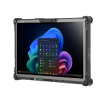
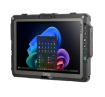
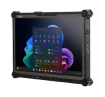
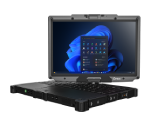
















As one of the leading rugged computer providers, Getac offers extensive rugged computing product lines and serves a wide range of vertical markets.


Unmanned systems are rapidly transforming how organizations conduct high-stakes operations in the most unforgiving environments. According to the latest Commercial Drones Market 2026-2030 Report by Technavio, the global market is forecasted to grow by US$22.33 billion through 2030, driven largely by the industrialization of swarm intelligence and the need for long-endurance power management.
Teams deployed in extreme conditions constantly face complex challenges, ranging from unexpected hardware failures to severe system fragmentation. Tactical UAV Command and Control (C2) demands unwavering reliability, security, and interoperability. As the Grand View Research 2030 Analysis highlights, the government and law enforcement segments are seeing the fastest adoption rates for maritime security, border patrol, and disaster management.
Mission-critical uptime is no longer a luxury; it is a fundamental requirement for operational success and safety.
Operational leaders and technical specialists require a centralized hub for edge computing that integrates seamlessly with diverse frameworks. They struggle with multiple, disconnected controllers and fragile equipment that cannot withstand the physical realities of the field. Reducing hardware failure rates directly correlates to higher mission success rates and improved safety for ground personnel.
This comprehensive guide examines the rapidly changing dynamics of remote drone control. We explore how advanced, ruggedized technologies are solving pressing industry pain points. By understanding the integration of military-grade hardware with AI-accelerated computing, organizations can drastically lower their total cost of ownership (TCO) while maximizing operational effectiveness.
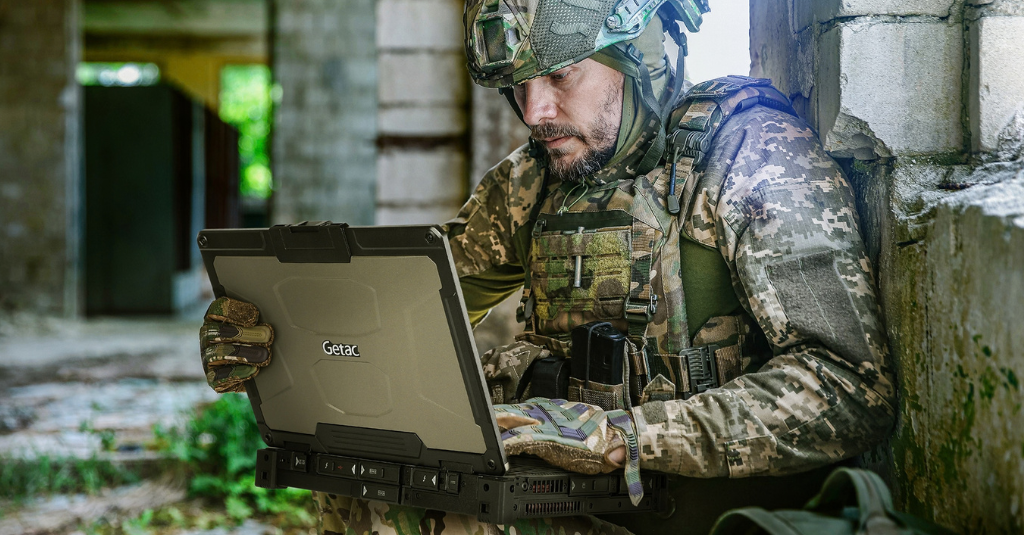
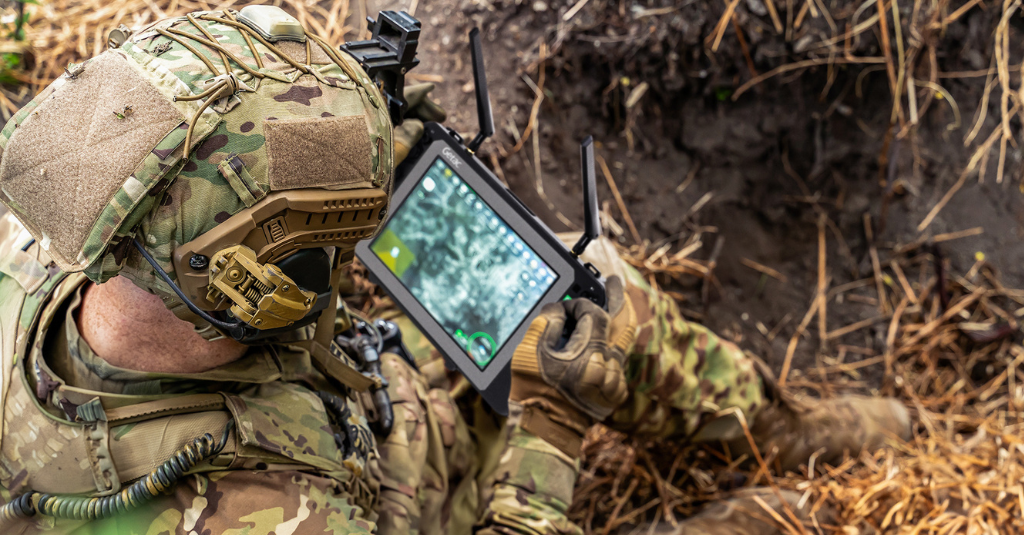 A soldier uses a Getac rugged tablet with antenna attachment to maintain real-time drone control and situational awareness during a field operation.
The operational landscape for unmanned systems has shifted dramatically over the last decade. Early drone deployments often relied on fragile, consumer-grade tablets or proprietary controllers that locked users into a single manufacturer's ecosystem. This created massive logistical hurdles for organizations trying to scale their fleets. Today, the focus has moved toward vendor-agnostic platforms and interoperable systems that can manage diverse unmanned aerial vehicles (UAVs), unmanned surface vehicles (USVs), and unmanned ground vehicles (UGVs) from a single unified interface.
Various sectors are discovering unique, high-stakes applications for drone technology. Defense organizations heavily utilize drones for Intelligence, Surveillance, and Reconnaissance (ISR). Public safety agencies rely on emergency response drone coordination to manage disasters and locate missing persons. Meanwhile, energy providers require robust systems for inspecting thousands of miles of remote infrastructure safely. As these use cases mature, the hardware controlling the drones must evolve to meet strict regulatory and environmental demands.
Getac recently announced the launch of the Getac CommandCore rugged drone control solution. This platform represents a significant leap forward for professionals operating in challenging environments. Getac CommandCore GCS provides a rugged, integration-ready ground control platform. It serves as a centralized, mission-ready hub designed for real-time data processing and seamless drone control.
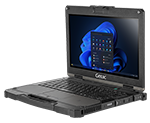
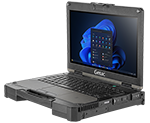
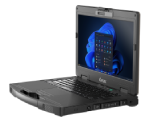
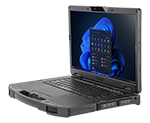
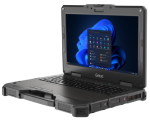
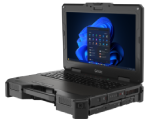
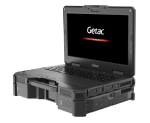
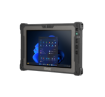
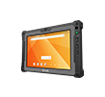
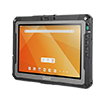
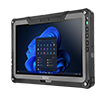
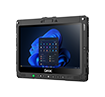
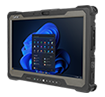
By combining Getac’s proven rugged hardware with industry-specific accessories, payloads, and software, organizations can build a system tailored to their exact operational scenarios. Customers can choose from an extensive range of Getac devices, including the ZX80 fully rugged Android tablet, the UX10 fully rugged Windows tablet, the S510 rugged Windows laptop, the B360 fully rugged Windows laptop, and the X600 fully rugged Windows workstation.
Operational leaders require hardware that integrates seamlessly with diverse frameworks while surviving the physical realities of the field. Research from the IDC MarketScape: Worldwide Rugged Mobile Devices 2025–2026 Assessment indicates that over 46% of frontline workers are now "mobile-dependent." The study confirms that while rugged devices require a higher upfront investment, their extended 3-to-5-year lifespans significantly lower TCO by reducing downtime and repair frequency.
To meet these demands, Getac's GCS solutions can be customized to achieve MIL-STD-810H certification, ensuring resistance to mechanical shock, vibrations, and extreme temperatures. The GCS solutions utilize a “dock” with pogo pin connections, which allows for the integration of tablets or notebooks.
Organizations also require protection against water and fine particulates. Through customization, the platform can utilize a rugged configuration with a tablet or laptop rated up to IP67, meaning the devices are heavily protected against dust ingress and can survive temporary submersion in water. Furthermore, power management is critical during extended operations. Getac CommandCore GCS features a hot-swappable battery for continuous flight ops. Operators can replace depleted batteries without shutting the system down, ensuring absolute continuity for prolonged missions.
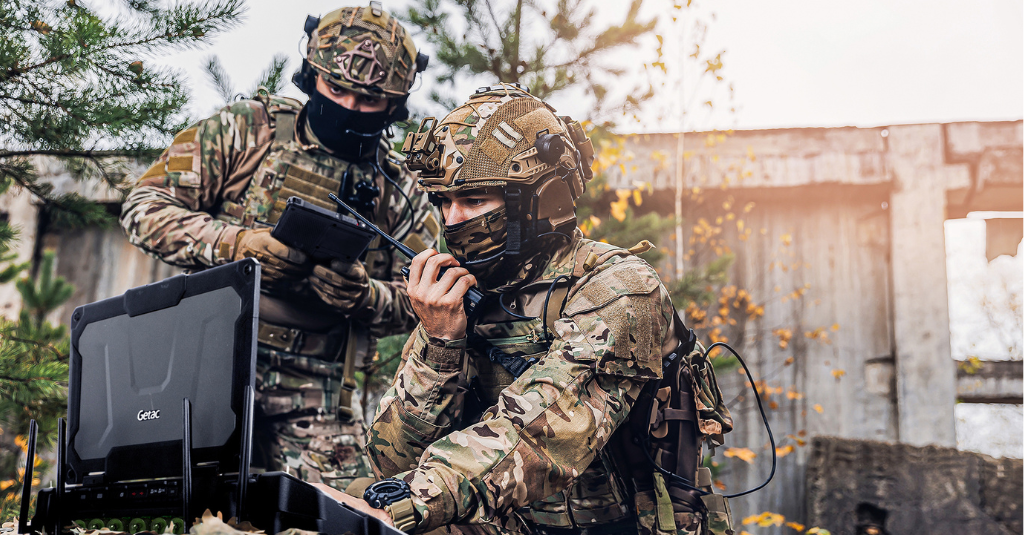
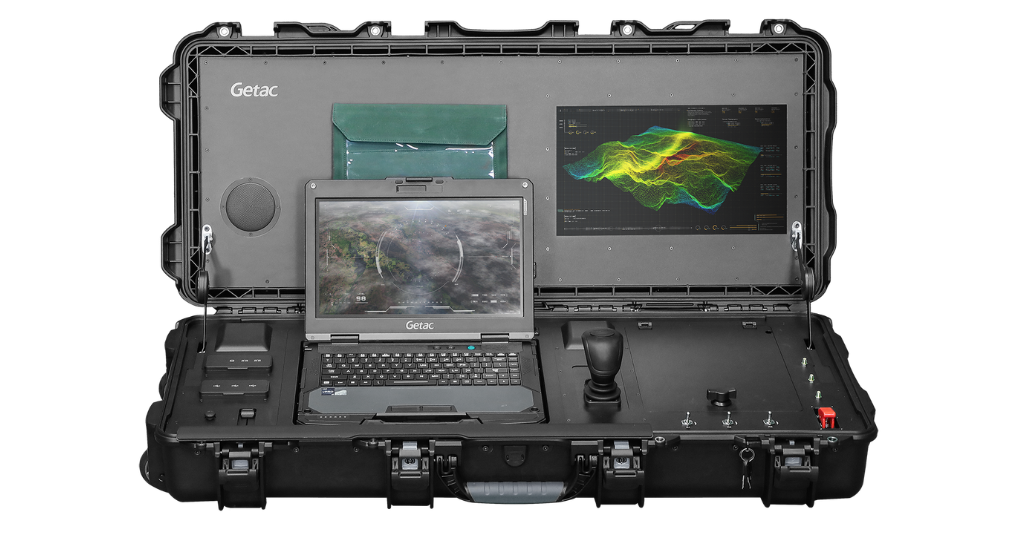 The Getac CommandCore GCS — a fully integrated, portable mission control hub featuring a rugged laptop, joystick drone controls, and a secondary terrain mapping display, ready to deploy anywhere the mission demands.
A rigid, one-size-fits-all approach fails in complex, multi-layered environments. Getac CommandCore GCS features a highly modular architecture designed specifically to support Multi-Domain Operations (MDO). The form factor of the GCS can be customized for maximum flexibility, offering options from a fully integrated design with built-in drone controls to a detachable-type design that separates the computing device from external drone controls.
This adaptability creates a truly portable mission control hub. For defense and tactical teams, Getac reserves maximum flexibility within the architecture to customize the solution for specific mission requirements. This capability directly solves the "multiple controller" pain point, establishing a unified control for heterogeneous UAV fleets. Operators can manage different drone models from different manufacturers using a single, familiar interface.
System lock-in drastically increases procurement costs and limits tactical flexibility. An interoperable GCS platform allows agencies to select the best drone for the mission, rather than being forced to use a specific drone because of controller limitations. CommandCore integrates smoothly with diverse drone ecosystems and supports interoperability with third-party technologies.
Communication stability is equally vital. The platform utilizes an RF-ready data link architecture. This configurable setup maintains secure and resilient connectivity across diverse networks, ensuring critical telemetry and video data continue to flow even in highly congested or electronically contested environments. The modular, swappable radio expansion allows quick adaptation across different radios and communication networks.
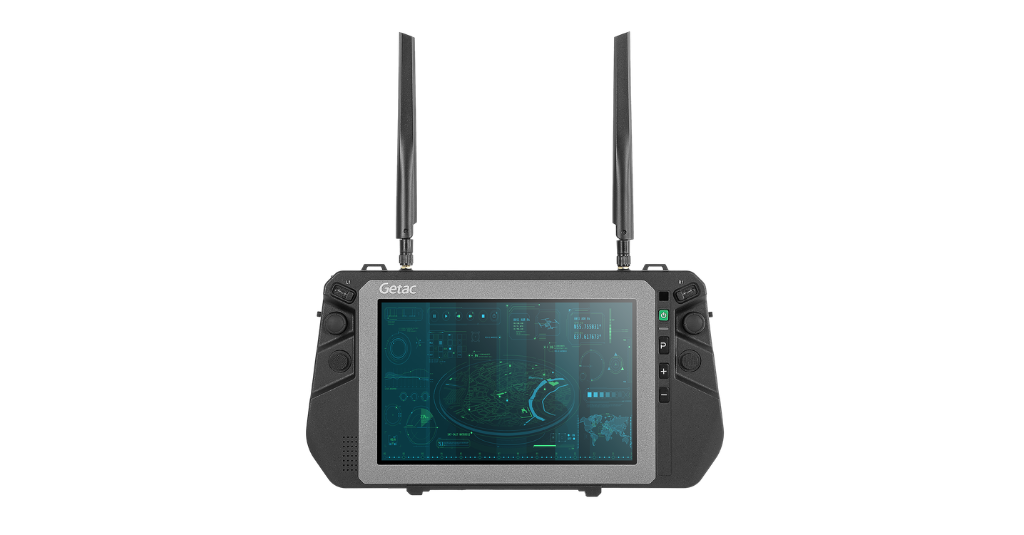
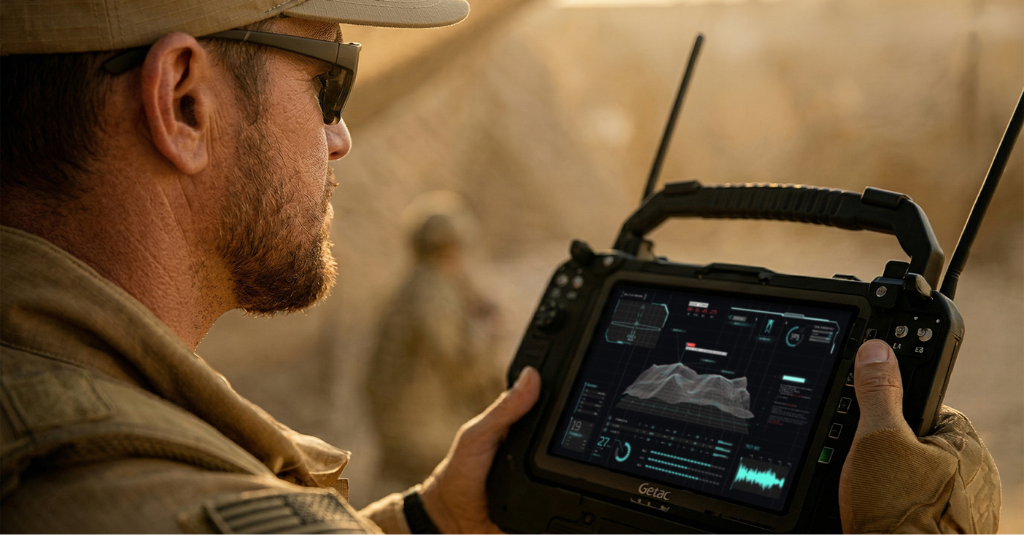
Getac's handheld GCS controller combines a dual-antenna RF communication system with an integrated tactical display, delivering secure, real-time UAV command and control in a compact, field-ready form factor.
Unmanned systems require specific configurations depending on the operational context. High-performance rugged devices adapt to these distinct industry needs.
In modern missions, information superiority dictates the pace of battle. Rugged Ground Control Stations support critical Intelligence, Surveillance, and Reconnaissance (ISR) activities from both mobile and semi-fixed command posts. This technology informs mission planning and execution strategies in real-time across land, sea, and air. By integrating seamlessly with advanced C4ISR systems, operators achieve the reliable control and Tactical Edge Computing necessary to maintain situational awareness in hostile territories.
During a crisis, every second counts. Drone reconnaissance plays an integral role in disaster response operations, ranging from fires and floods to complex rescue missions. First responder situational awareness is vastly improved when teams can gather critical information quickly. A portable GCS enables teams to launch a SAR (Search and Rescue) aerial survey directly from the scene, mapping disaster zones and identifying survivors with thermal payloads.

A field technician uses the Getac handheld GCS to remotely monitor a drone during a wind turbine inspection — reducing personnel risk while enabling real-time remote asset monitoring across vast, hard-to-reach infrastructure.
Maintaining vast networks of powerlines and pipelines is hazardous and expensive. Rugged control stations enable utilities professionals to conduct remote asset monitoring safely from a centralized location. Using reliable power line drone inspection hardware, crews can rapidly assess hard-to-reach rural areas. This minimizes the need for personnel to physically navigate high-voltage zones or dangerous, inaccessible terrain.
Modern drones capture massive amounts of high-definition video, thermal imaging, and Light Detection and Ranging (LiDAR) data. Sending all this data back to a centralized cloud server introduces unacceptable latency during time-critical missions. Edge AI data processing allows the computation to happen locally on the Ground Control Station.
Getac CommandCore GCS provides NPU-accelerated AI inference . This Neural Processing Unit (NPU) capability, combined with GPU-accelerated processing, supports fast data analysis, live video processing, and real-time system control. Operators can utilize AI to automatically detect anomalies, identify targets, or map terrain instantly, enabling smarter and faster decision-making directly at the tactical edge.
As drone fleets expand, procurement directors and IT leaders face mounting pressure to optimize budgets. Investing in highly durable, vendor-agnostic hardware is the most effective strategy for reducing drone fleet TCO. Devices backed by comprehensive warranties minimize downtime and reduce unexpected repair costs throughout the product lifecycle.
Data security also remains a paramount concern. Programs like the "Keep Your SSD" warranty ensure secure data sovereignty, allowing organizations to retain their storage drives during the repair process so sensitive intelligence never leaves their control. Additionally, field-repairable GCS solutions, supported by programs like the Getac Self-Maintainer Program, allow authorized teams to replace selected components directly on-site, drastically reducing operational disruption.
The success of complex, multi-domain operations depends entirely on the reliability of the underlying technology. Professionals navigating defense scenarios, public safety emergencies, and critical infrastructure inspections require tools that adapt to their unique workflows. By implementing rugged, vendor-agnostic control stations powered by edge AI, organizations can drastically improve their operational efficiency, safety, and data security.
Transitioning away from fragile, proprietary controllers toward highly durable, interoperable platforms secures long-term scalability. As unmanned systems continue to evolve, investing in a robust, centralized mission control hub ensures that your teams remain equipped to handle the unpredictable challenges of tomorrow. Focus on integrating hardware that prioritizes mission-critical uptime, and empower your ground personnel with the secure, high-performance technology they need to execute their missions flawlessly.
What makes a Ground Control Station (GCS) MIL-STD-810H certified?
MIL-STD-810H is a set of military standards that emphasizes tailoring equipment’s environmental design and test limits to the conditions it will experience throughout its service life. A certified GCS has passed rigorous laboratory testing for resistance to drops, severe shocks, extreme temperatures, humidity, and vibrations, ensuring reliable performance in harsh field environments.
How does NPU-accelerated AI inference benefit drone operations?
An NPU (Neural Processing Unit) is a specialized circuit designed to accelerate artificial intelligence and machine learning applications. In a GCS, NPU-powered AI inference allows the local device to process complex algorithms—such as real-time object recognition or thermal anomaly detection—instantly at the edge, without relying on a latent cloud connection.
Can one GCS control multiple types of drones?
Yes. A vendor-agnostic, interoperable GCS platform uses standardized communication protocols to interface with heterogeneous UAV fleets. This eliminates the need for operators to carry multiple proprietary controllers, streamlining operations and reducing training requirements.
How does a hot-swappable battery work in a tactical GCS?
A hot-swappable battery system utilizes dual batteries or an internal bridge battery. This design allows an operator to remove a depleted main battery and insert a fully charged one while the GCS remains powered on and fully operational, ensuring continuous mission-critical uptime.

As one of the leading rugged computer providers, Getac offers extensive rugged computing product lines and serves a wide range of vertical markets.


Subscribe below to be kept up to date on the latest industry and technology trends. We will send you a monthly blog round-up direct to your inbox.