Compliance Frameworks: CMMC, Zero Trust, and CJIS
CMMC 2.0 Phase 1 took effect in DoD contracts on November 10, 2025, requiring Level 1 and, where applicable, Level 2 self-assessments. Level 2 covers contractors handling CUI and maps to the 110 security requirements in NIST SP 800-171. Phase 2, which would have made third-party C3PAO certification a condition of award for many Level 2 contracts starting November 10, 2026, was suspended by the Department of Defense on July 13, 2026 pending a 60-day program review. Phase 1 self-assessment requirements remain in place. As of publication, the Department has not announced a restart date for Phase 2.
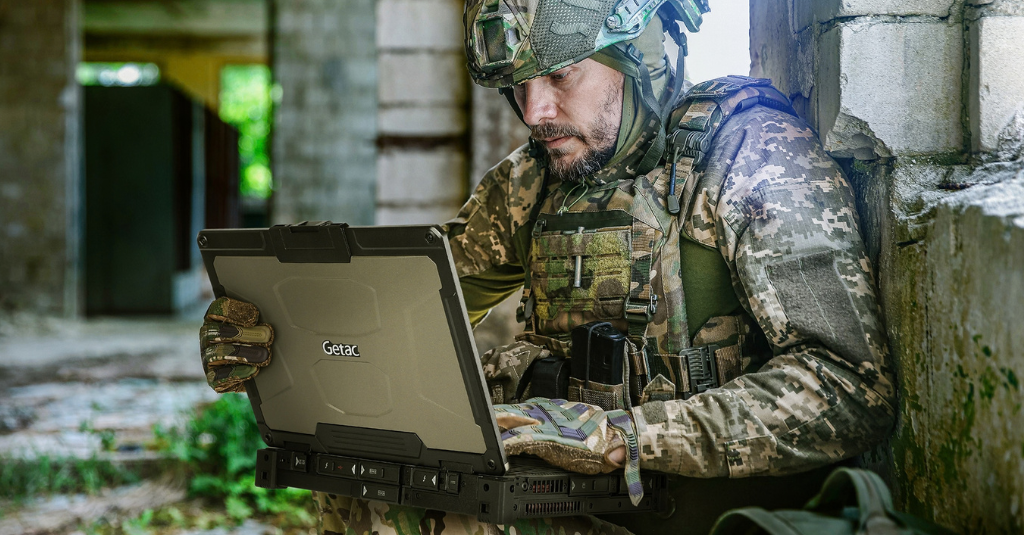
At the device level, CMMC Level 2 practices such as access control, audit logging, configuration management, and media protection can be supported by rugged laptop security features including TPM 2.0, Secure Boot, self-encrypting SSDs, and smart card authentication. CMMC assesses the contractor's environment as a whole, so device features contribute to compliance but do not establish it on their own.
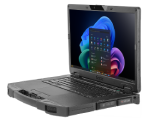
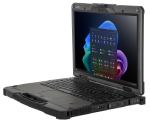
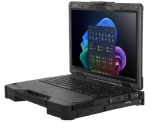
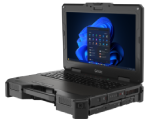
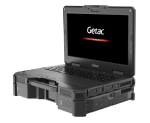
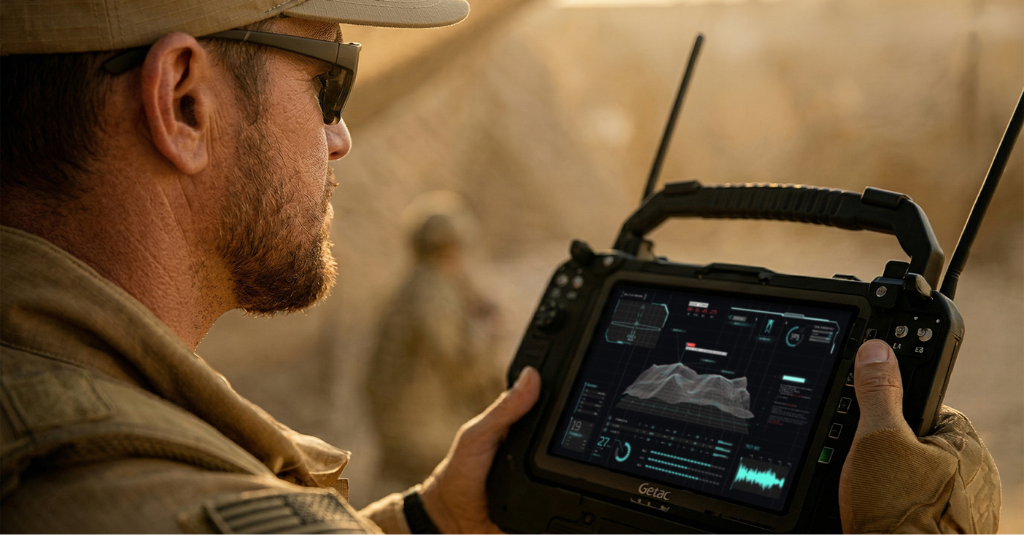
Zero Trust addresses the endpoint from a different angle: no user, device, or connection is trusted by default. At the endpoint, that typically means hardware-verified identity at boot, continuous authentication, encrypted storage, and the ability to manage, lock, or wipe a device remotely. TPM 2.0, Secure Boot, and MFA contribute to these requirements. Intel vPro, available on select Getac configurations, supports remote management, and Absolute Persistence is available as an option on the B360 Pro, X600, and S510.
Law enforcement agencies deploying rugged laptops certified to U.S. Military Standard MIL-STD-810H also need Criminal Justice Information Services (CJIS) compliance, the Federal Bureau of Investigation (FBI) security policy governing access to criminal justice information. CJIS requires multi-factor authentication, encryption, and audit controls that overlap with many military deployment requirements.
Physical Security Controls for Classified and Sensitive Information
Physical rugged laptop security features are commonly specified in defense deployments, and some are not listed on standard product pages. Three features to evaluate are:
- Kensington lock slot: helps deter theft in secured facilities, command posts, and vehicle mounts. The B360 Pro, X600, and S510 each include one.
- Removable microphone and webcam: often required in classified spaces where recording capability must be physically removed. On the S510, the webcam is an optional configuration.
- Webcam privacy shutter: often required by facility security policies when the webcam is not removable, physically covering the lens when the camera is not in use.
These requirements typically come from facility security plans and classified area operating procedures and are not always included in device specifications. Confirm them directly with the vendor before procurement.
Security Specifications to Ask About Directly
Some security specifications do not appear on standard product pages because they target specific technical audiences or depend on program-specific configuration. Defense buyers should raise these explicitly:
- SIPR/NIPR compatibility: SIPR access depends on hardware, software, and accreditation requirements set by each program. Confirm what is needed before procurement.
- FIPS 140-3 validated components: ask which cryptographic modules are individually validated instead of accepting a broad description as FIPS compatible.
- CMMC assessment scope: confirm which devices fall within CUI scope and whether the configuration supports the required NIST SP 800-171 controls.
- BIOS-level lockout: protection in the Basic Input/Output System (BIOS) firmware designed to prevent configuration tampering even if an attacker bypasses the operating system.
- Optical drive security: if a device includes an optical drive, confirm how the drive can be disabled or controlled to prevent unauthorized data transfer. The B360 Pro offers an optional DVD or Blu-ray drive, and the S510 offers an optional DVD drive, both in the multimedia bay.
- DAR key management: encryption enforced at rest with key management that aligns with organizational policy.
- Intel vPro: remote management and hardware-based security features that help maintain compliance across distributed or forward-deployed environments with limited on-site information technology (IT) support. On Getac devices, vPro is standard on the X600 and available on select B360 Pro and S510 configurations.
Getac's military customization program adapts devices to mission requirements, including BIOS-level customization (for example, controlling docking station ports on the B360) and rugged military connectors. Contact Getac to discuss which of the specifications above can be addressed for a specific program.
Glossary
CMMC (Cybersecurity Maturity Model Certification): A DoD program requiring defense contractors to verify cybersecurity compliance as a condition of contract award. Level 2 aligns with NIST SP 800-171 and covers contractors handling CUI. Phase 1 (self-assessments) took effect in November 2025. Phase 2 (third-party certification) was suspended in July 2026 pending review.
FIPS 140-3: Federal Information Processing Standard 140-3. The U.S. government standard defining security requirements for cryptographic modules protecting sensitive federal information. Validation applies to individual cryptographic modules, not to whole devices.
Secure Boot: A firmware feature that verifies bootloader and operating system (OS) integrity before the system loads, blocking unauthorized or tampered software at startup.
TPM 2.0 (Trusted Platform Module): A cryptographic processor, often a dedicated chip on the device motherboard, used for secure key storage, authentication, and platform integrity verification.
Zero Trust: A security model requiring verification of every user, device, and connection before granting access. At the endpoint level it relies on hardware-verified identity, encrypted storage, and continuous authentication.
DAR (Data at Rest): Data stored on a device that is not in transit. DAR security through self-encrypting drives helps protect stored data if a device is lost, stolen, or seized.
SIPR/NIPR: Secret Internet Protocol Router / Non-Classified Internet Protocol Router. Two physically separate DoD networks for classified and unclassified data.
CAC (Common Access Card): The standard DoD smart card required for access to many military systems, issued to active duty personnel, civilian employees, and eligible contractors.
CJIS: Criminal Justice Information Services. The FBI security policy governing criminal justice data access, requiring multi-factor authentication, encryption, and audit controls.
Toolless Drive Removal: A hardware design allowing the storage drive to be extracted from the chassis without tools, helping protect data on a lost or captured device and enabling rapid field data transfer.
Frequently Asked Questions
What are the key rugged laptop security features for military use?
Military rugged laptop security features span four layers: authentication (CAC, smart cards, MFA), storage (TPM 2.0, self-encrypting SSDs, FIPS 140-3 validated modules, DAR encryption), firmware (Secure Boot, BIOS-level lockout), and physical controls (toolless drive removal, removable or optional webcams, Kensington lock slots). These address scenarios that consumer-grade security typically does not: device capture in the field, classified space access controls, and DoD network requirements.
What is CMMC and how does it affect rugged device procurement?
CMMC 2.0 requires defense contractors to demonstrate cybersecurity compliance as a condition of DoD contract award. Level 2 covers contractors handling CUI and maps to the 110 requirements in NIST SP 800-171. At the device level, rugged laptops that support access control, encryption, configuration management, and audit logging can help contractors meet those requirements. Phase 1 took effect on November 10, 2025. Third-party C3PAO assessments for Level 2 were scheduled to become mandatory on November 10, 2026, but the Department of War suspended Phase 2 on July 13, 2026 pending review. Phase 1 self-assessment requirements remain in force.
What is a Zero Trust rugged endpoint?
A Zero Trust rugged endpoint verifies identity and integrity at the hardware level before granting access. TPM 2.0 provides hardware-based key storage, Secure Boot verifies firmware integrity at startup, MFA verifies user identity, and encrypted storage helps protect data if the device leaves the authorized environment. Intel vPro, where available, supports remote management and compliance maintenance across distributed deployments.
Which Getac laptops are suited to defense security requirements?
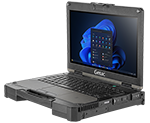
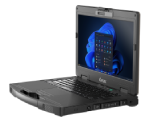
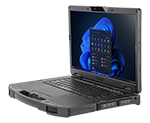
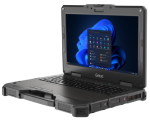
Getac's B360 Pro and X600 are certified to MIL-STD-810H, MIL-STD-461G, and Ingress Protection (IP) rating IP66, and include a smart card reader, TPM 2.0, and user-removable storage. The S510 is certified to MIL-STD-810H and IP53, with an optional smart card reader and a user-removable self-encrypting SSD. CMMC applies to a contractor's overall environment rather than to individual devices, so these features support compliance efforts but do not establish compliance on their own. Getac's military customization program can adapt devices further, including BIOS-level customization and rugged military connectors. Contact Getac to confirm configurations against specific program and compliance requirements.