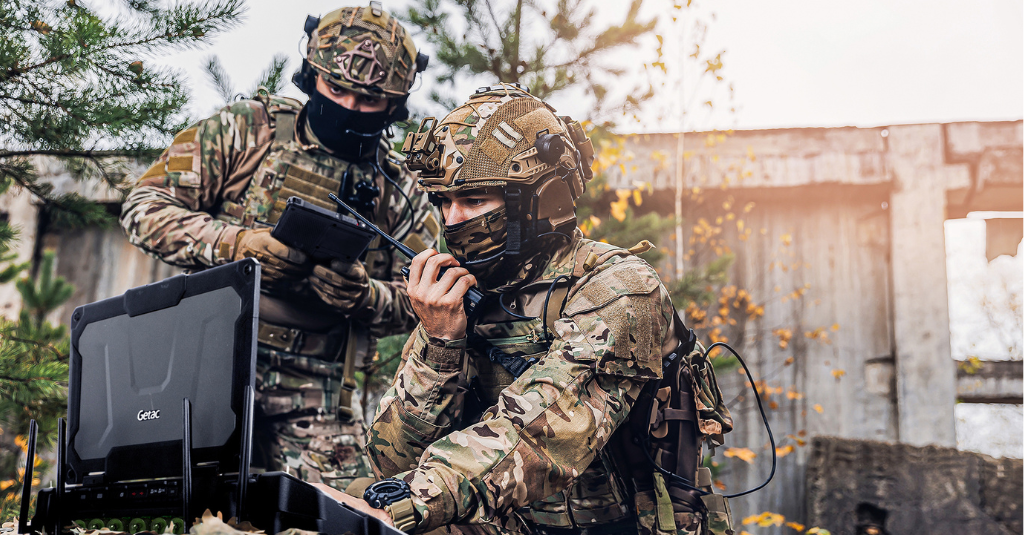
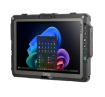
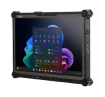
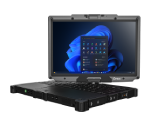
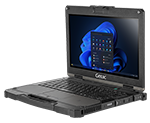
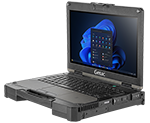
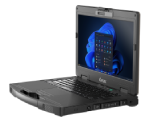
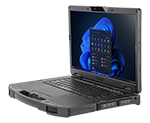
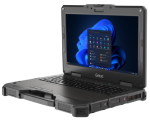
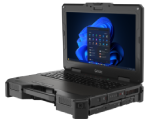
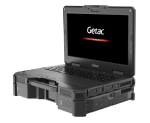
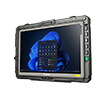
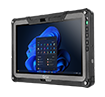
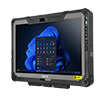
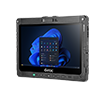

















As one of the leading rugged computer providers, Getac offers extensive rugged computing product lines and serves a wide range of vertical markets.



Rugged device certifications are critical for utility operations, where extreme weather, vibration, moisture, and electromagnetic interference can cause standard devices to fail within hours.
MIL-STD-810H validates real-world durability, helping devices withstand temperature extremes, drops, vibration, and humidity in demanding field conditions.
IP ratings (IP53–IP67) define protection against dust and water, helping utilities choose the right level of ingress protection for indoor work, heavy rain exposure, or flood response scenarios.
Hazardous environment certifications like ATEX and IECEx are essential for safe operations around gas infrastructure, fuel storage, and chemical handling areas.
Security certifications such as FIPS 140-2, Common Criteria, and TPM integration protect sensitive utility data for compliance with regulatory and cybersecurity requirements.
Multi-factor authentication and hardware-based encryption enhance device security in the field, reducing the risk of unauthorised access without slowing down operations.
Certified rugged devices support worker safety, assisting reliable communication, real-time monitoring, and emergency response in high-risk environments.
Comprehensive certification portfolios help reduce operational risk and downtime, helping utilities maintain grid reliability while avoiding costly compliance penalties.
Choosing the right certification mix improves total cost of ownership, balancing durability, lifecycle performance, and long-term regulatory compliance.
Working with a certified rugged technology partner like Getac helps support compliance efforts, with documented testing, industry-specific warranties, and lifecycle support aligned to utility requirements.
Utility companies often operate in harsh environments—such as bad weather, extreme temperatures, moisture, vibration, or dust—that may exceed the tolerances of consumer electronics lacking certified ruggedised protection. In certain extreme cases, field conditions in the utility sector may cause non‑ruggedised consumer electronics to fail within hours. From the electromagnetic interference near power transformers to the corrosive salt spray at coastal wind farms, field operations demand technology that can withstand conditions most devices never encounter. This reality makes proper certification not just a regulatory requirement, but a necessity for dependable performance.
Regulatory compliance is critical for utilities, as penalties for non-compliance can reach millions of dollars. However, the operational risks extend far beyond financial consequences: when field devices fail during storm responses or critical maintenance operations, the impact affects public safety and grid reliability. This piece will review the essential certifications utilities companies must prioritise, and how a partner like Getac can ensure compliance through their comprehensive certification portfolio.
Getac's approach to certification represents over three decades of engineering expertise focused exclusively on rugged technology. With 30+ years in rugged technology and 14+ rugged form factors, Getac offers the most comprehensive certified solution portfolio in the industry.
The foundation of essential rugged device certification centres on four primary areas:
Environmental durability through military standard (MIL-STD) compliance
Protection standards via IP ratings
Specialised certifications for hazardous environments
Security frameworks that meet stringent regulatory requirements.
This approach ensures devices perform reliably across the diverse operational scenarios utilities encounter.
These certifications subject devices to rigorous testing to comply with military standards that have evolved specifically to address application-specific challenges. A technology partner's commitment to military-grade certification helps provide utility teams with technology tested for challenging environments and aimed at supporting performance during critical moments.
Getac's IP certification portfolio spans from IP53 for rugged applications to IP67 for full submersion scenarios. This range allows utilities to select the appropriate protection level for specific operational requirements while maintaining compliance with industry standards.
The MIL-STD-810H certification indicates that a device has undergone rigorous testing to ensure it can withstand specific environmental stressors and mechanical shocks. While ingress protection against moisture and dust is typically governed by IP ratings, MIL-STD-810H focuses on a device's durability through high and low temperature cycles, humidity, vibration, and drop testing. Rather than labelling a device as inherently "resistant," this certification verifies that the equipment can successfully maintain functionality after exposure to these specific, extreme testing conditions.
This comprehensive testing helps devices to operate reliably in the harsh conditions commonly encountered in utility operations—from the vibration of helicopter transport during emergency response to the extreme temperatures of desert solar installations—when used in accordance with the operating guidelines specified in the product manual.
MIL-STD-810G was replaced by MIL-STD-810H in 2019, incorporating significant improvements in testing methodology and scope. The newer standard introduces stricter requirements and additional tests that better reflect modern operational environments.
Key improvements in MIL-STD-810H include:
Enhanced Temperature Testing: Dynamic temperature cycling that simulates the range of environmental changes utility workers experience when moving between climate-controlled facilities and outdoor environments
Improved Altitude Testing: Coverage up to 150,000 feet versus 100,000 feet in 810G, addressing high-altitude utility operations and helicopter-based maintenance activities
Real-World Vibration Simulation: Multi-axis testing that simultaneously excites all device resonances, accurately replicating the complex vibrations encountered in utility vehicles and equipment platforms
Environmental Life Cycle Analysis: Requirements for manufacturers to analyse how environmental stresses impact a device's entire operational lifecycle, ensuring long-term reliability in utility applications. Life cycle analysis is becoming a popular metric in product ratings, balancing the initial cost against the total cost of ownership or sustainability performance.
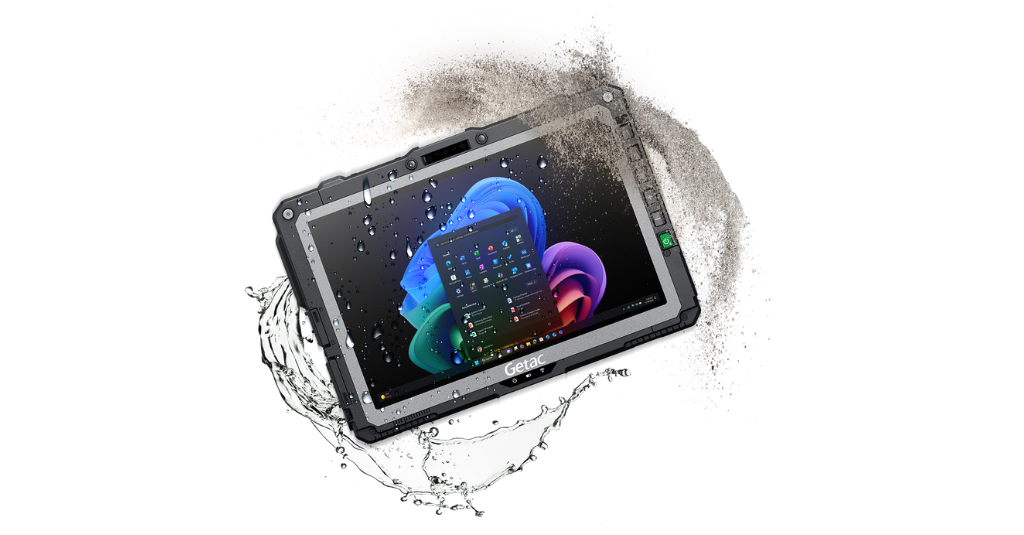
Rugged tablets are designed to withstand water, dust, and impact, supporting reliable performance in demanding utility environments.
Getac’s portfolio offers specialised Ingress Protection (IP) levels tailored to specific application requirements. These ratings, ranging from IP53 to IP67, helping our devices remain operational by preventing the entry of solids and liquids in challenging environments.
We provide standardised protection levels across our rugged lineup to meet various operational needs:
IP53-Certified Devices: We offer basic protection against dust penetration and water spray for indoor utility operations and light field work where exposure to the elements is limited.
IP65/66-Rated Solutions: We provide complete dust protection and resistance to water jets, making these devices ideal for your outdoor utility maintenance and storm response activities where equipment is exposed to heavy rain.
IP67-Rated Protection: Representing the highest level of protection in our portfolio, this rating helps your device be completely dust-tight and can withstand temporary immersion in water. This is critical for flood response and utility operations in extreme, wet environments.
Getac's devices have been certified for use in potentially explosive atmospheres. The ATEX and IECEx Zone 2/22 certifications are crucial for utility operations involving the storage or transportation of fuel and other flammable or hazardous materials.
These certifications become essential when utility teams work around:
Natural Gas Infrastructure: Pipeline maintenance, compressor stations, and distribution facilities
Power Generation Facilities: Coal handling systems, turbine maintenance areas, and fuel storage zones
Chemical Storage Areas: Battery facilities, maintenance workshops with flammable materials, and transformer oil handling
To meet the stringent requirements of federal and international agencies, we offer specialised configurations that align with top-tier security standards. Please note that these compliance levels are achieved through the selection of optional hardware, such as modified or third-party encrypted SSDs, rather than being a native feature of all standard models.
Key security certifications include:
TPM (Trusted Platform Module): We integrate hardware-based security to ensure encrypted storage and secure authentication, providing a dedicated cryptographic processor that serves as a robust root of trust for your system.
FIPS 140-2 Compliant Solutions: We support federal standards for cryptographic modules by offering optional, specialised encrypted drives designed for sensitive applications and high-security environments.
Common Criteria Evaluations: We provide configurations that meet international security evaluation standards (ISO/IEC 15408). This ensures our products can be verified against a consistent framework for IT security, depending on the specific hardware components selected.
Getac's solutions incorporate advanced authentication mechanisms, including integrated smart card readers, fingerprint scanners, and optional RFID readers. These multi-factor authentication systems provide layered security that prevents unauthorized access while maintaining operational efficiency for authorised personnel.
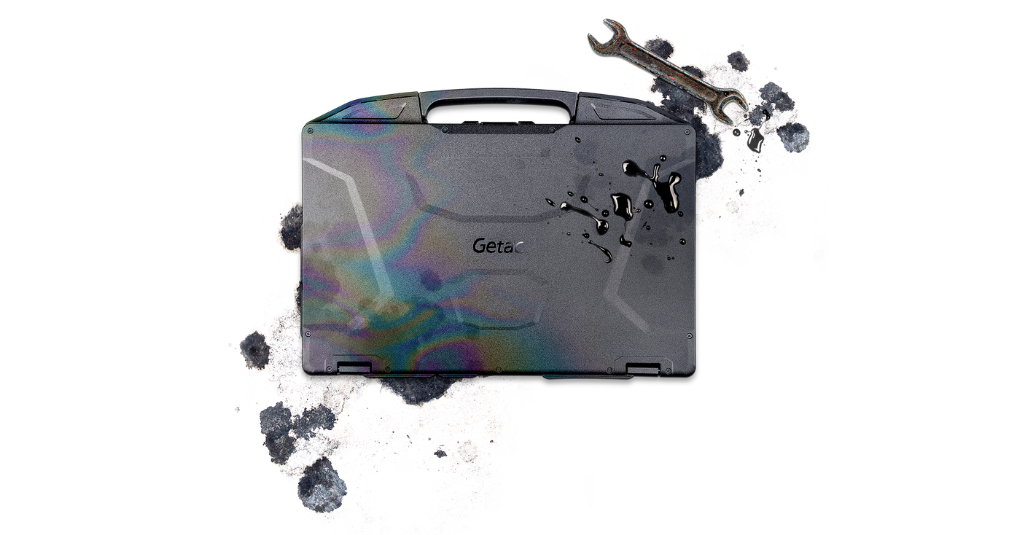
Rugged devices are built to withstand exposure to liquids, debris, and tough conditions, supporting reliable performance in utility field operations.
Rugged device certifications help support safer operations by providing technology designed to enhance communication and data access during critical tasks. When devices meet stringent environmental and security standards, utility workers can stay focused on their tasks with greater confidence in the technology designed to support them.
Safety-critical applications include:
Emergency Response Coordination: Reliable communication during storm restoration and equipment failures
Hazardous Material Monitoring: Environmental sensing integration and real-time data transmission
Lone Worker Protection: GPS tracking and emergency notification capabilities in remote locations
Field devices must support extended use while wearing personal protective equipment. Getac's designs include glove-compatible touchscreens, high-brightness displays readable in direct sunlight (500-1000 nits), and lightweight constructions that reduce worker fatigue during extended operations. Learn more about Getac's utility-specific solutions.
Unlike manufacturers who focus on generic certifications, Getac provides industry-specific warranty coverage designed around real-world utility usage patterns. This approach recognises that utility field conditions represent normal operating environments, rather than exceptional circumstances that require special consideration.
Getac provides comprehensive certification documentation to support regulatory audits and compliance verification. This documentation package includes:
Test Reports: Detailed results from all certification testing
Compliance Matrices: Clear mapping between regulatory requirements and device capabilities
Ongoing Compliance Support: Updates and guidance as regulations evolve
Getac supports long-term device compliance through comprehensive service offerings, including available Bumper-to-Bumper coverage that extends beyond standard component warranties. By leveraging a vertically integrated supply chain, Getac provides the technical agility required to help customers adapt to shifting regulatory and operational requirements throughout a device’s lifecycle.
Investing in properly-certified rugged devices delivers measurable returns through reduced operational risks, improved regulatory compliance, and enhanced worker productivity. Implementing solutions designed for safety and reliability can strengthen stakeholder and user confidence, while supporting organisations in their broader efforts to improve operational resilience.
The complexity of utility operations demands technology partners who understand both the technical requirements and the regulatory landscape. Through proper certification selection and implementation, utilities can focus on their core mission of providing reliable and safe energy services, knowing that their technology infrastructure is designed to support high standards of durability, security, and regulatory expectation. For more information on how Getac can support your utility's compliance requirements, visit our certification overview or contact our utility specialists.
What is military grade durability certification?
Military grade durability certification refers to devices that have passed MIL-STD-810H testing standards established by the U.S. Department of Defence. These devices are exposed to harsh conditions, including extreme temperatures, shock/drop, vibration, dust, and humidity. Military test methods and certifications such as MIL‑STD‑810H, MIL‑STD‑461G, and IP66 evaluate devices under a range of rigorous environmental conditions to support military‑grade durability claims, helping demonstrate their capability to operate in challenging environments commonly encountered by utility workers.
What is the difference between MIL-STD-810G and 810H?
MIL-STD-810G was replaced by MIL-STD-810H in 2019, with significant improvements in testing methodology. The key differences include: 810H covers altitudes up to 150,000 feet, compared to 100,000 feet in 810G, addressing high-altitude operations; introduces dynamic temperature cycling that better simulates real-world conditions; requires an environmental lifecycle analysis for long-term reliability; and includes stricter vibration testing with multi-axis simulation. Devices certified to 810G cannot automatically meet 810H standards; retesting is required due to the more rigorous requirements.
What is the difference between IP68 and MIL-STD-810H?
IP68 and MIL-STD-810H test different aspects of device protection. IP68 specifically measures water and dust ingress protection, indicating a device can be submerged in water beyond 1 metre for extended periods with complete dust protection. MIL-STD-810H is a comprehensive environmental testing standard covering nearly 30 different conditions, including temperature extremes, shock, vibration, humidity, altitude, and more. While IP68 focuses solely on water/dust protection, MIL-STD-810H provides broader environmental durability certification. Getac devices often carry both certifications for complete protection.
Is "military grade rugged" durability drop resistance?
Military grade rugged durability includes drop resistance as one component of comprehensive protection. MIL-STD-810H testing includes specific drop tests that simulate devices being dropped onto concrete from various heights and angles. However, military grade certification goes far beyond drop resistance to include protection against extreme temperatures (-20°F to 145°F), vibration, shock, humidity, dust, water ingress, and electromagnetic interference. Getac’s military‑grade devices are tested to withstand drops of up to six feet and are designed to operate in a wide range of environmental conditions commonly encountered by utility workers when used in accordance with the product manual.
What is salt fog testing, and why is it important?
Salt fog testing evaluates a device's corrosion resistance in high-salinity environments. Since salt is highly corrosive, Getac utilises proprietary defence systems including Magnesium Chemical Conversion (MGCC), four-layer acrylic resin painting, and microstructure drainage technology. Successfully navigating these rigorous evaluations—which involve intensified cycles of exposure and drying—demonstrates the equipment's capability to withstand maritime and coastal conditions where standard rugged devices are typically susceptible to damage.

As one of the leading rugged computer providers, Getac offers extensive rugged computing product lines and serves a wide range of vertical markets.


Subscribe below to be kept up to date on the latest industry and technology trends. We will send you a monthly blog round-up direct to your inbox.