
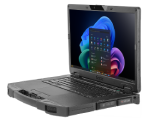
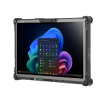
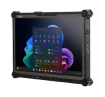
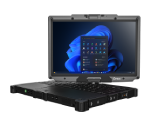
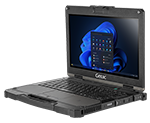
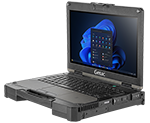

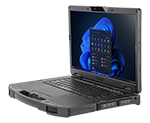
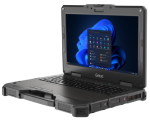
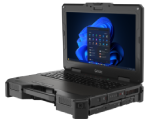
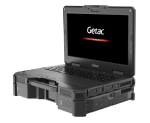
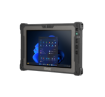
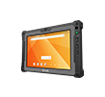
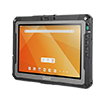
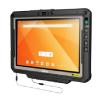
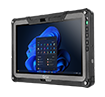
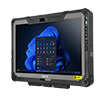


















As one of the leading rugged computer providers, Getac offers extensive rugged computing product lines and serves a wide range of vertical markets.


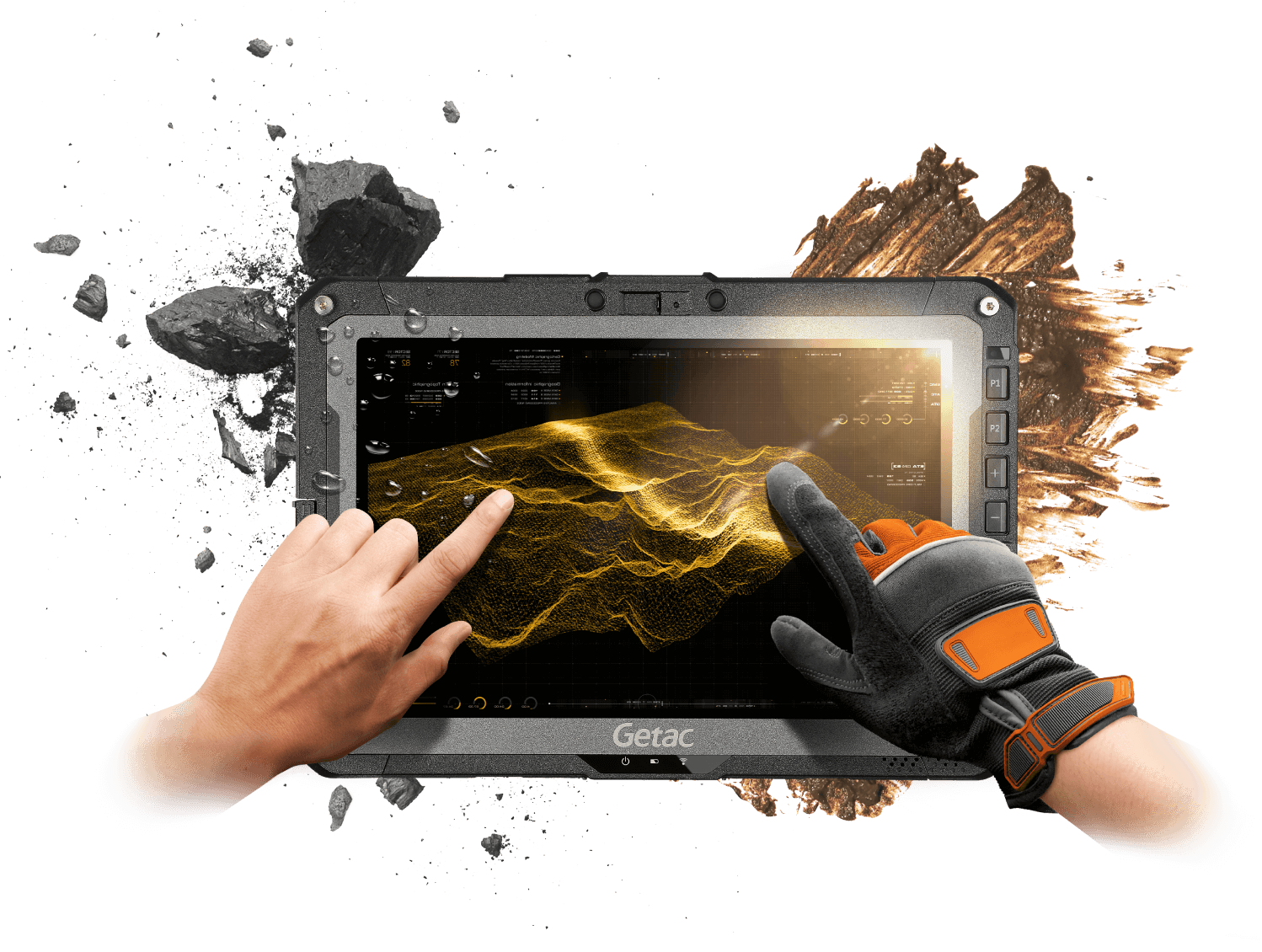
Rugged device customisation is the process of configuring hardware, software, and certifications on rugged-designed field computing devices to match the specific environmental, operational, and regulatory requirements of an industry deployment, beyond what standard MIL-STD or IP ratings provide.
Generic enterprise hardware no longer meets the needs of field professionals working in extreme or regulated environments. A utility engineer inspecting high-voltage infrastructure, a refinery technician running diagnostics in a Zone 2 hazardous area, or a defence operator processing drone footage at the tactical edge; each faces conditions that expose the limits of off-the-shelf devices in minutes. Rugged device customisation addresses that gap by removing failure points that generate much larger costs downstream.
This article explains what customisation actually means in a rugged device context, why the shift from durability-focused hardware to intelligent, configurable field platforms is accelerating, and how purpose-built configurations translate into measurable outcomes across the industries that depend on them most.
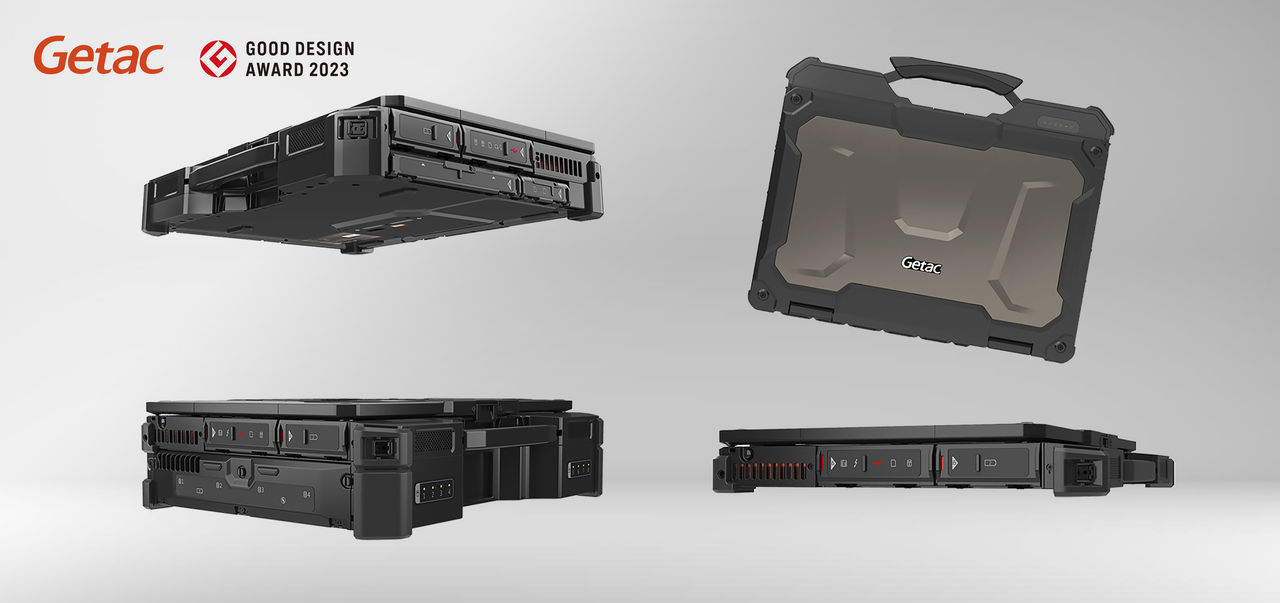
The Getac X600's modular port bays allow configuration to be matched to specific workflow and connectivity requirements — an example of hardware-layer customisation in practice.
Customisation in rugged computing spans hardware, software, and certification layers — and the distinctions matter for procurement decisions.
At the hardware layer, customisation includes modular I/O configurations (barcode scanners, RFID readers, vehicle communication interfaces, dedicated GPS modules), display specifications optimised for outdoor or low-light environments, port and connector arrangements matched to specific workflows, and protective housing modifications for environments with chemical exposure or extreme vibration. Getac's Custom Solutions programme uses its proven rugged platforms as a foundation, and then adds specialized features, integrations, and accessories to match the operational environment precisely.
At the software and ecosystem layer, customisation means pre-loading field service applications, configuring mobile device management (MDM) profiles, locking down interfaces to reduce attack surface in secure environments, and ensuring interoperability with the GIS, fleet management, EHR, CAD/RMS, or WMS platforms that field teams already use. This layer is where productivity gains materialise fastest: a device delivered pre-configured to a specific workflow eliminates the IT deployment cycle that otherwise delays field deployment by weeks.
At the certification layer, customisation extends to compliance requirements. For industries where explosive atmospheres may be present, such as oil and gas, chemical processing, mining, and some utilities environments, standard MIL-STD and IP certifications are necessary but not sufficient. ATEX and IECEx Zone 2/22 certification is a regulatory requirement in those environments, not a specification upgrade. Getac's EX product range, including the ZX10-EX, F110-EX, and K120-EX, carries both ATEX and IECEx Zone 2/22 certification for use in potentially explosive atmospheres.
MIL-STD-810H is a U.S. Department of Defence environmental testing standard that defines the laboratory methods used to verify whether electronic equipment can survive real-world field conditions. The "H" designates the current revision, maintained by the U.S. Army's Developmental Test Command. Unlike marketing terms such as "military-grade" or "ruggedised," MIL-STD-810H is a documented, pass/fail testing protocol.
The standard covers nearly 30 distinct test methods across four primary environmental stress categories:
MIL-STD-810H certification does not specify a single device design; it specifies the test conditions a device must survive. This means procurement teams can compare certified devices on equal terms regardless of manufacturer, because the test protocol is standardised. A Getac device certified to MIL-STD-810H has passed the same documented test battery as any other certified device on the market.
For rugged device customisation, MIL-STD-810H is the baseline certification layer, not the ceiling. Every custom configuration built on a Getac platform, regardless of application or industry segment, begins with a chassis that has already cleared MIL-STD-810H testing across all relevant methods. Customisation adds capability on top of a verified mechanical foundation, rather than requiring re-certification from the ground up.
What is rugged device customisation, and how is it different from standard configuration?
Rugged device customisation configures hardware, software, and certifications on a purpose-built field device to match the specific environmental, operational, and regulatory requirements of an industry deployment. Standard configuration covers software setup: app installation, MDM enrollment, user accounts. Customisation goes further: modular I/O hardware, display specifications, port configurations, pre-integrated software environments, and compliance certification for the operating environment. The result is a device operationally ready from day one rather than adapted in the field.
Which industries benefit most from customised rugged devices?
The highest-value use cases are in industries where the operating environment is structurally incompatible with standard hardware: utilities and energy, oil and gas,mining, defence and public safety, and field service and logistics. In each sector, device failure carries operational, safety, or regulatory consequences that make purpose-built configuration a strategic necessity rather than a preference.
What does ATEX certification mean, and when is it required?
ATEX certification is mandatory in the EU for electronic devices used in environments where explosive gas, vapour, mist, or combustible dust may be present. Zone 2/22 certification, the most common requirement in oil and gas and chemical processing, covers areas where explosive atmospheres occur occasionally rather than continuously. Using uncertified devices in these environments can create compliance risks and may be prohibited under local rules or site policies. Getac's EX product line, including the ZX10-EX and F110-EX, carries both ATEX and IECEx Zone 2/22 certification.
How does customisation relate to total cost of ownership?
Customisation may help reduce total cost of ownership through three mechanisms: lower integration costs, lower replacement frequency, and faster field deployment. IDC's 2023 Industrial Rugged Devices Survey of 990 IT decision-makers documented TCO reductions of 10–20% for rugged tablets and up to 30% for rugged laptops compared to consumer alternatives. A device configured at manufacture for a specific workflow costs less to integrate and fails less often than a generic device adapted after purchase.
What is the EU ESPR, and how does it affect rugged device procurement?
The EU Ecodesign for Sustainable Products Regulation (ESPR), in force from 2025, requires manufacturers and procurers of electronics sold in the EU to document the full product lifecycle and provide digital product passports covering durability, repairability, and recyclability. For procurement teams, this makes device longevity a compliance obligation. Long-lifecycle rugged devices with documented repairability and upgrade paths align with ESPR requirements; short-lifecycle consumer alternatives do not.
What does "AI-ready rugged" mean in practise?
AI-ready rugged refers to devices with sufficient on-device processing to run AI inference workloads (real-time anomaly detection, image recognition, and predictive maintenance) without cloud connectivity. The Getac F120, one of the first fully rugged Copilot+ PCs in a tablet form factor, delivers up to 48 TOPS of on-device processing via its Intel Core Ultra 200V Series NPU. This enables field professionals to run AI workloads in environments where cloud connectivity is unreliable, latency-constrained, or operationally prohibited.
How do I choose between fully rugged and rugged Getac devices?
Fully rugged devices (MIL-STD-810H certified, IP66/67 rated) are the correct choice for outdoor environments, high-vibration conditions, temperature extremes, and any setting where drops or submersion are daily risks. Rugged devices suit predominantly indoor environments with occasional outdoor exposure, where weight and form factor are priorities and conditions are more controlled. Getac's full portfolio spans both categories, with configuration options at each tier.

In airborne and field response scenarios, a rugged handheld device provides reliable access to mission data without depending on cabin infrastructure or cloud connectivity.
The shift in how organisations frame rugged device investment is driven by accumulated evidence on total cost of ownership from capital expenditure on hardware to strategic infrastructure. In a 2024 IDC InfoBrief sponsored by Getac, 35% of respondents expected a total cost of ownership reduction of more than 20% after implementing rugged devices. The IDC 2023 Industrial Rugged Devices Survey (n=990 IT decision makers) found TCO reductions of 10–20% for rugged tablets and mobile devices, and 20–30% for rugged laptops and PCs, compared to conventional alternatives.
Customisation amplifies those TCO advantages in specific ways:
Until recently, the rugged device market's primary differentiator was physical durability. That advantage has not disappeared, and now a second axis has emerged: intelligence at the edge. As analysis from Embedded World 2026 notes, there is a clear market shift from purely durability-focused hardware toward high-performance, intelligent, and secure edge computing platforms.
Rugged edge devices now serve simultaneously as data aggregation hubs, local processing units, secure communication gateways, and field AI platforms, a combination that was not commercially viable pre-2024. TechNavio's 2026 rugged devices market forecast identifies this intelligent-platform trend as a primary driver of the market's projected USD 1.35 billion growth between 2026 and 2030.
Getac's response to this shift is the F120 fully rugged tablet and the V120 fully rugged laptop. The F120 is Getac's first fully rugged Copilot+ PC in a tablet form factor, built on the proven platform of the F110 and equipped with on-device AI processing that enables real-time data analysis, inference, and autonomous response in field conditions where cloud connectivity is unreliable or operationally prohibited. The device also carries dual hot-swappable batteries, a 30MP rear camera, user-removable SSD for secure configurations, and customisation options, including full comms removal and camera disable, that make it deployable in defence and classified environments. A full demonstration of the F120's field capabilities was presented at DSEI 2025.
The V120 extends the same AI-ready platform to a fully rugged convertible laptop form factor that’s suited to field engineers, emergency responders, and utilities operators who need a full keyboard interface alongside rugged field performance.
Industry | Edge AI Application | Outcome |
Utilities | Real-time anomaly detection on sensor data during grid inspections | Reduced truck rolls; faults flagged before they escalate |
Oil & Gas | On-device image analysis for pipeline and equipment inspection | Faster inspection cycles without cloud dependency in remote sites |
Defence / Public Safety | Drone video processing and sensor fusion at the tactical edge | Actionable intelligence without data transmission latency |
Industrial Manufacturing | Predictive maintenance inference from machine vibration and thermal data | Reduced unplanned downtime; fewer catastrophic failures |
Field Service | Automated work order completion and parts identification via AI | Faster first-time-fix rates; reduced return visits |
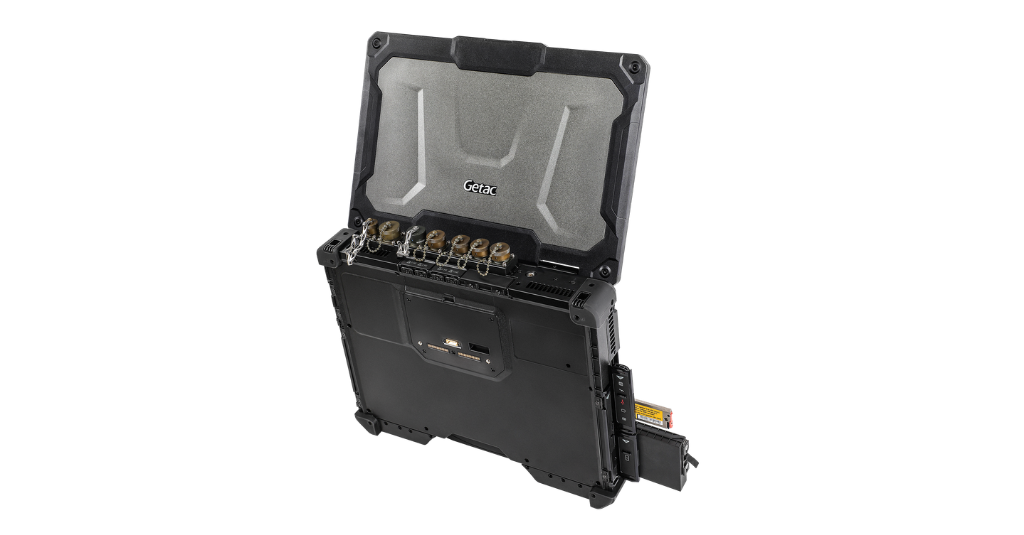
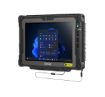
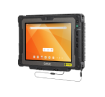
Custom protection covers and reinforced port structures, secured by tethered chains, help prevent dislodgement and foreign object damage (FOD) during rough handling. This is an example of mechanical customisation for demanding field and military environments.
Utilities field teams operate in extreme heat in summer substations, sub-zero temperatures in winter grid inspections, high-vibration environments in generation facilities, and outdoor conditions that render standard displays unreadable. Beyond physical resilience, utilities teams increasingly need real-time GIS integration, LiDAR compatibility, and connectivity to SCADA and asset management platforms. Customized rugged tablets with high-nit LumiBond displays, dedicated GPS, and pre-integrated field service software eliminate the gap between device capability and operational requirement.
This is the sector where the certification layer of customisation becomes non-negotiable. Workers in refineries, offshore platforms, and chemical processing facilities operate in environments classified under ATEX Zone 2, areas where explosive gas atmospheres may occasionally be present, or Zone 22, covering combustible dust. In many regulated environments, using non-certified devices may not meet site, safety, or regulatory requirements. Getac's ATEX/IECEx-certified EX device range provides the computing capability needed for digital work orders, inspection management, and process monitoring in form factors suited to those environments, subject to the required certifications and deployment conditions.
Mining environments combine mechanical shock, dust, humidity, and extreme temperatures with the connectivity constraints of underground or remote surface operations. Device customization for mining typically includes reinforced port seals, dedicated barcode and RFID scanning for material tracking, offline-capable software configurations, and vehicle-mount integration for use in heavy equipment cabs. The operational cost of a device failure underground, where replacement parts and technician access are measured in hours, not minutes, makes upfront customisation investment straightforward to justify.
Customisation in defence and public safety contexts addresses a different primary constraint: security. Getac's defence-ready configurations include removable SSDs for classified data handling, camera and communications disable options for secure environments, TPM 2.0, MFA, secure boot, and FIPS/Common Criteria-aligned configurations. The F120's comms removal option allows the device to operate in environments where radio frequency emissions are prohibited, a capability that standard rugged tablets, however physically durable, cannot offer.
Field service organisations operating in mixed indoor/outdoor environments often have a different customisation priority: workflow integration. The highest-value customisation for a field service fleet is typically pre-loaded FSM software, integrated barcode scanning for parts identification, and vehicle-mount dock configurations that charge and connect the device automatically when the engineer returns to the vehicle. These configurations reduce per-technician administration time and improve first-time-fix rates by ensuring the device is always charged, always connected, and always presenting the correct workflow.
Electronics are one of the fastest-growing waste streams globally, and e-waste has nearly doubled since 2010. Customised rugged devices address this problem structurally, not through carbon offsetting or reporting adjustments.
The mechanism is straightforward: a device purpose-built for its operating environment lasts longer than a generic device adapted to that environment. Rugged devices are typically designed for longer service life in harsh conditions than consumer devices. Longer device lifecycles may help reduce replacement frequency and, in turn, lower material use and waste generation. For organisations calculating Scope 3 emissions, the magnitude of emissions from the disposal and replacement of technology assets is measurable, and one that rugged customisation directly reduces.
The EU's Ecodesign for Sustainable Products Regulation (ESPR), which came into force in 2025, formalises these requirements for organisations selling or procuring electronics in the EU market. ESPR requires manufacturers to account for the full product lifecycle, from raw material extraction through manufacturing, use, and end-of-life, and mandates digital product passports that disclose product-specific environmental information including durability, repairability, and recyclability. The 2025–2030 ESPR Working Plan also introduces mandatory repairability scoring for electronics and recyclability requirements for electrical and electronic equipment.
For procurement teams device longevity is becoming an increasingly relevant consideration in sustainability and compliance planning. A customised rugged device may better support durability and repairability goals associated with ESPR principles than a short-lifecycle consumer device.
The IDC Industrial Rugged Devices Survey 2023 found that 43% of surveyed organisations cited device durability reducing replacement frequency and e-waste as a sustainability benefit of rugged adoption, making it the most commonly cited environmental outcome ahead of energy efficiency improvements.
Getac's approach to custom solutions is structured around four value commitments that apply regardless of the vertical or configuration:
Rugged to the Core: every customised configuration begins with a platform that has already passed MIL-STD-810H testing across all relevant methods: temperature, vibration, shock, humidity, altitude, and drop. Customisation adds capability without compromising the base certification.
See in Any Conditions: LumiBond display technology with up to 1,400 nits of brightness, combined with glove-compatible and rain-operable touch, ensures the device is usable in the environments where it is deployed — not just in the conditions specified at purchase.
Power Without Pause: hot-swappable dual battery configurations on devices including the F120 and B360 ensure continuous operation without device shutdown during shift changes or extended deployments. Combined with vehicle-mount charging docks, field teams do not encounter the device availability gaps that standard devices create.
Secure by Design: security customisation is built in at the hardware level, not applied as a software layer. Removable SSDs, TPM 2.0, MFA support, secure boot, and the option to physically disable cameras and communications mean that security configurations are verifiable, not assumed.

In utilities and industrial environments, purpose-configured rugged devices give field technicians reliable access to inspection data and diagnostics without interrupting hands-on equipment work.
Rugged Device Customisation The process of configuring hardware components, software environments, and regulatory certifications on purpose-built field computing devices to match the specific operational, environmental, and compliance requirements of an industry deployment — going beyond standard MIL-STD or IP ratings to deliver a device that is operationally ready from day one.
MIL-STD-810H A U.S. Department of Defence environmental testing standard that subjects devices to more than 30 laboratory test methods simulating real-world field conditions, including temperature extremes (operating range of -29°C to 63°C), mechanical shock, vibration, humidity, altitude, and drop impact. Devices that pass MIL-STD-810H testing are considered field-validated for use in harsh operational environments.
ATEX Certification A mandatory European Union regulatory certification (from the French "ATmosphères EXplosibles") for electronic equipment used in environments where explosive gas, vapor, mist, or combustible dust may be present. ATEX-certified devices display the "Ex" marking and incorporate intrinsic safety engineering that prevents sparks or heat buildup that could trigger an explosion.
IECEx The International Electrotechnical Commission's global certification framework for equipment used in explosive atmospheres, recognised in more than 35 member countries worldwide. IECEx and ATEX evaluate equipment against similar safety criteria; organisations operating internationally often require both, as EU operations must maintain ATEX compliance while IECEx covers non-EU markets.
ATEX Zone 2 / Zone 22 Zone 2 classifies hazardous areas where explosive gas or vapour atmospheres are not normally present but may occur occasionally during abnormal operations. Zone 22 is the equivalent classification for combustible dust environments. Both are the most common hazardous area classifications in oil and gas, chemical processing, and some utilities environments, and represent the scope of Getac's EX-certified product line.
IP Rating (Ingress Protection) A two-digit classification defined by IEC standard 60529 that rates a device's resistance to solid particles (first digit, 0–6) and liquids (second digit, 0–8). IP67 indicates complete dust-tight protection and resistance to immersion up to 1 metre for 30 minutes; IP68 covers immersion beyond 1 metre. Rugged devices for field use typically require a minimum of IP65 for dust and water jet resistance.
Edge AI The execution of artificial intelligence inference workloads like real-time data analysis, anomaly detection, image recognition, and predictive modelling, directly on a field device rather than in a cloud or data center. Edge AI enables field professionals to process and act on data in environments where cloud connectivity is unreliable, latency-constrained, or prohibited for security reasons.
Total Cost of Ownership (TCO) The full financial cost of a device fleet over its operational lifetime, including purchase price, deployment and integration labour, maintenance and repair costs, downtime costs from device failure, and replacement frequency. Rugged customised devices consistently deliver lower TCO than consumer alternatives in harsh environments, with IDC research documenting reductions of 10–20% for tablets and mobile devices, and up to 30% for laptops and PCs, compared to conventional devices.
Copilot+ PC Microsoft's certification category for AI-ready PCs equipped with a Neural Processing Unit (NPU) capable of at least 40 TOPS (tera operations per second) of on-device AI processing. The Getac F120 is a fully rugged Copilot+ PC in a tablet form factor, enabling on-device AI inference in field conditions without cloud dependency.
ESPR (Ecodesign for Sustainable Products Regulation) A European Union regulation in force from 2025 that requires manufacturers and procurers of electronics sold in the EU to document the full product lifecycle (durability, repairability, and recyclability) and to provide digital product passports disclosing product-specific environmental data. ESPR makes device longevity a procurement compliance requirement, not merely a cost consideration.
To explore Getac's Custom Solutions programme or discuss device configurations for your operating environment, visit Getac Custom Solutions or contact your regional Getac representative.

As one of the leading rugged computer providers, Getac offers extensive rugged computing product lines and serves a wide range of vertical markets.


Subscribe below to be kept up to date on the latest industry and technology trends. We will send you a monthly blog round-up direct to your inbox.